Melrose Author Jane Healey Publishes Fifth Novel: The Women of Arlington Hall
By Ellen Putnam
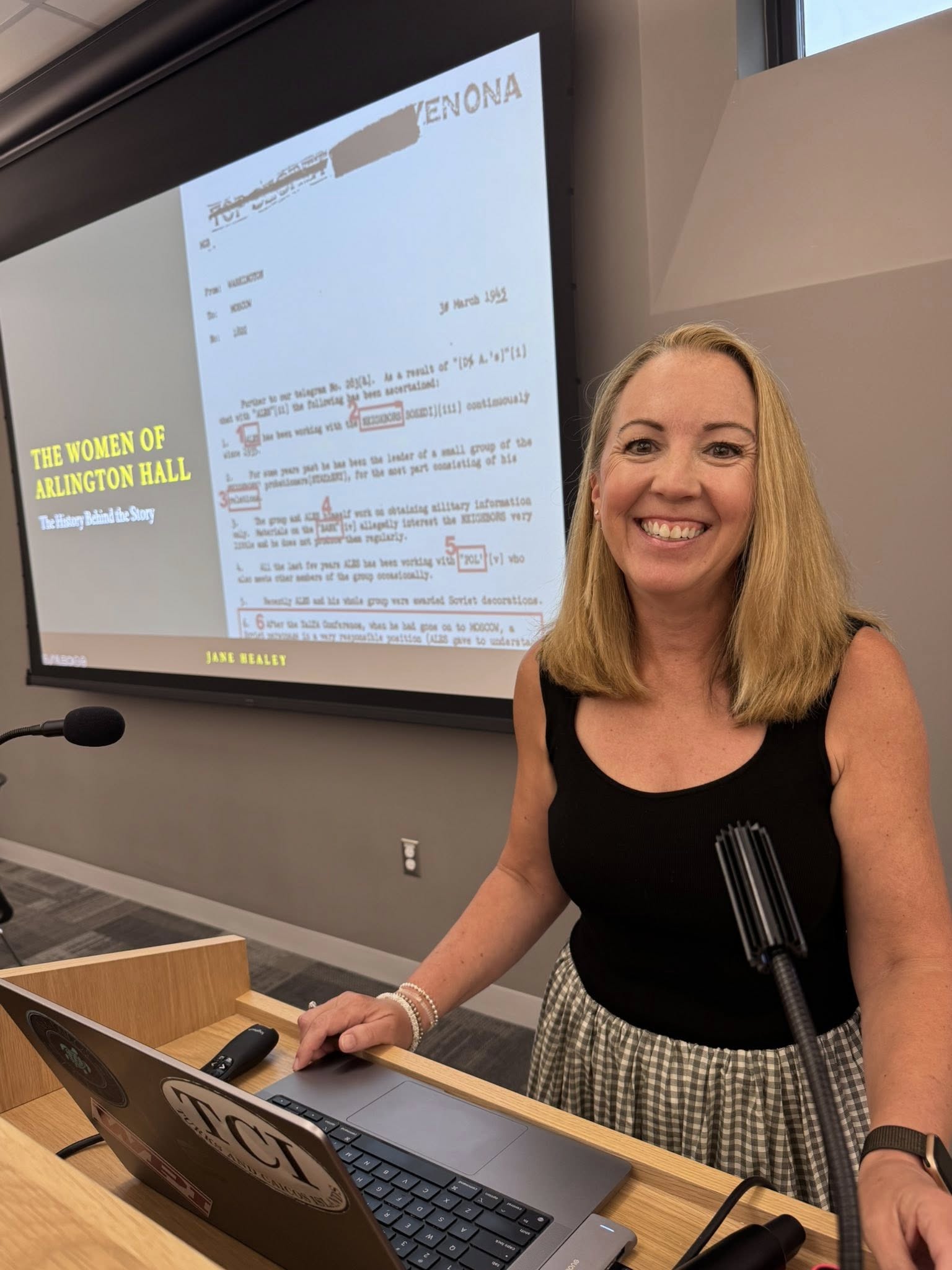
Photo Credit: Nancy Clover
On Wednesday evening, Melrose author Jane Healey spoke to a packed crowd in the new Melrose Public Library’s lower-level meeting room about her newest release, The Women of Arlington Hall.
Healey is a familiar face at the library: she hosts a monthly virtual program offering historical fiction book recommendations, and her podcast, Historical Happy Hour, is popular among library patrons and staff.
Healey recalled launching her first book, The Saturday Evening Girls Club, in the old library’s Children’s Room. “It was something like my second time public speaking. ever. I was so nervous, I was shaking. And some little kid came downstairs crying because the Children’s Room closed early. But you all showed up, and you bought my book.”
Now, four books later, Healey is a popular figure not only in Melrose, but in the world of historical fiction.
Healey’s three intervening books - The Beantown Girls, The Secret Stealers, and Goodnight from Paris - all took place during World War II, and after three books, Healey said, “I was ready to research and write about a different era.”
Her latest book, The Women of Arlington Hall, which came out on August 1st, moves forward a few years in time to the beginning of the Cold War. It focuses on the codebreaking teams - 90% of whom were women - who worked out of Virginia’s Arlington Hall. One group in particular, which the novel features, succeeded at breaking the “unbreakable” code that encrypted Soviet communications. They were able to use this knowledge to identify Soviet spies in the United States, including those who leaked plans for the Atomic Bomb to the Soviet government.
The concept for The Women of Arlington Hall first came to to Healey in 2018 when she read an article in the Smithsonian magazine by Liza Mundy about women codebreakers. (Mundy also wrote a nonfiction book on the topic, Code Girls.)
“I held onto the article,” said Healey, “I knew there was a story there.”
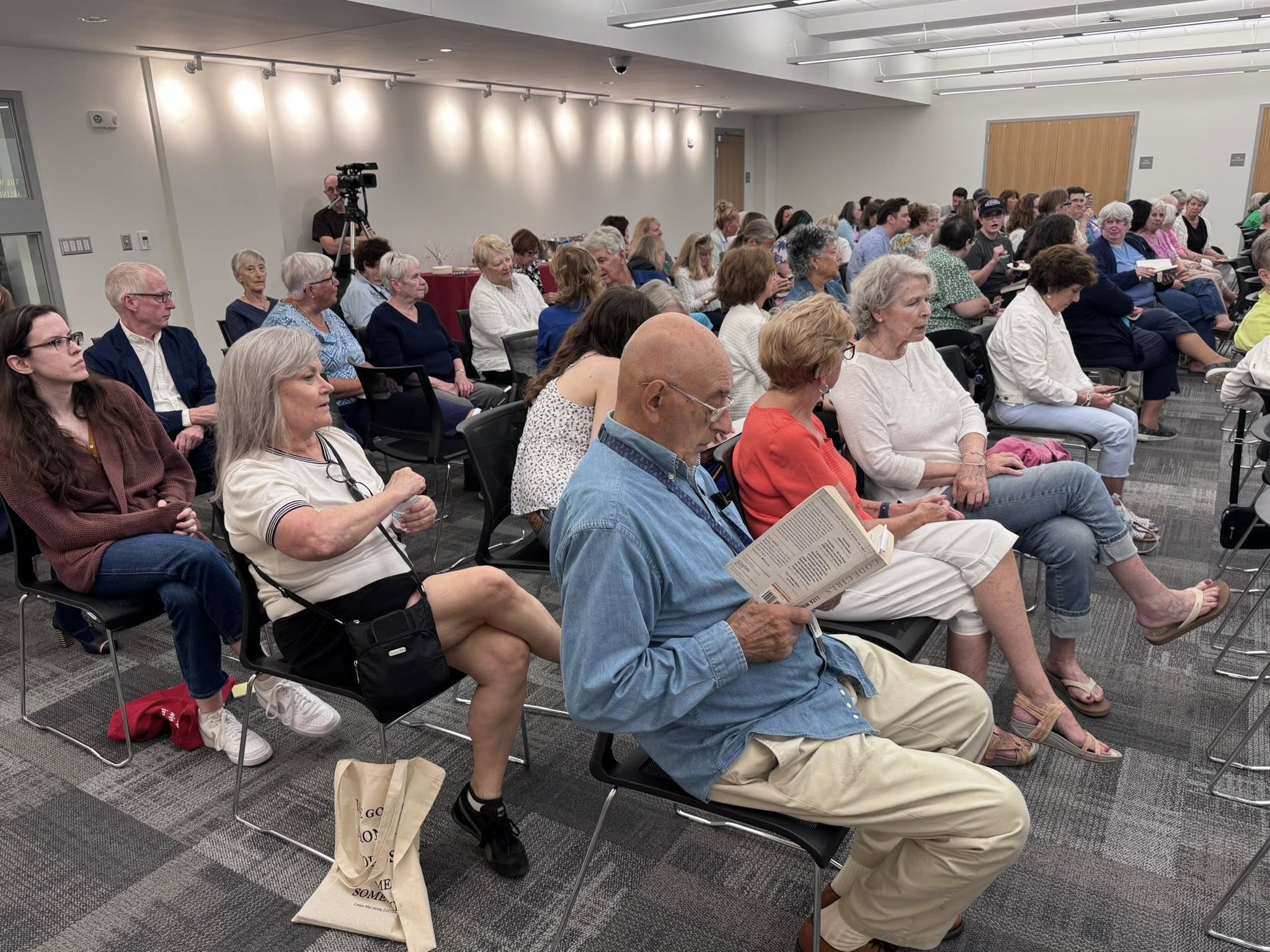
Melrose Public Library's lower-level meeting room was packed for the event
Photo Credit: Nancy Clover
The story of the codebreakers involves big personalities. Meredith Gardner, the group’s leader, was, Healey described, “a complete genius.” “He was introverted, quirky, and today we would probably call him neurodivergent.” (And very handsome - Healey showed the audience a photo of Gardner and quipped, “of course you have to put him in the book when he looks like this!”)
And there was Robert Lamphere, the FBI official who worked with Gardner to find evidence to charge and arrest suspected spies. “If you had to pick Meredith Gardner’s opposite, Robert Lamphere was it,” said Healey, describing Lamphere as a midwestern athlete who flirted with all the women around him. “It took Gardner a while to warm up to Lamphere,” Healey added.
The story touches on larger issues of the time and their real-world consequences: The development of the atomic bomb and its effect on innocent civilians, including a girls’ camp in New Mexico downwind from the Trinity test site, and, of course, the victims in Hiroshima and Nagasaki. (Healey noted that her presentation fell on the 80th anniversary of the bombing of Hiroshima.) It also touches on the larger implications of the search for Soviet spies, including the conviction and execution of Julius and Ethel Rosenberg, and the country’s descent into McCarthy-ism, paranoia, and blacklisting.
Part of the reason the codebreakers’ work is still largely unknown is that their work was only declassified (in part) in 1995, and many of the women who worked on the project didn’t speak about it until much later. These women were instructed to tell their families and friends they were secretaries, and some kept up that facade for decades.
Angeline Nanni, for instance, who was profiled in the Smithsonian article at the age of 99, only began speaking about her role in the project very late in her life.
“These women came from all backgrounds,” Healey said, “and I tried to represent that in the book. Some of them came from small towns, looking for an experience in the big city. Not all of them were college-educated. One of them had been a home ec teacher.”
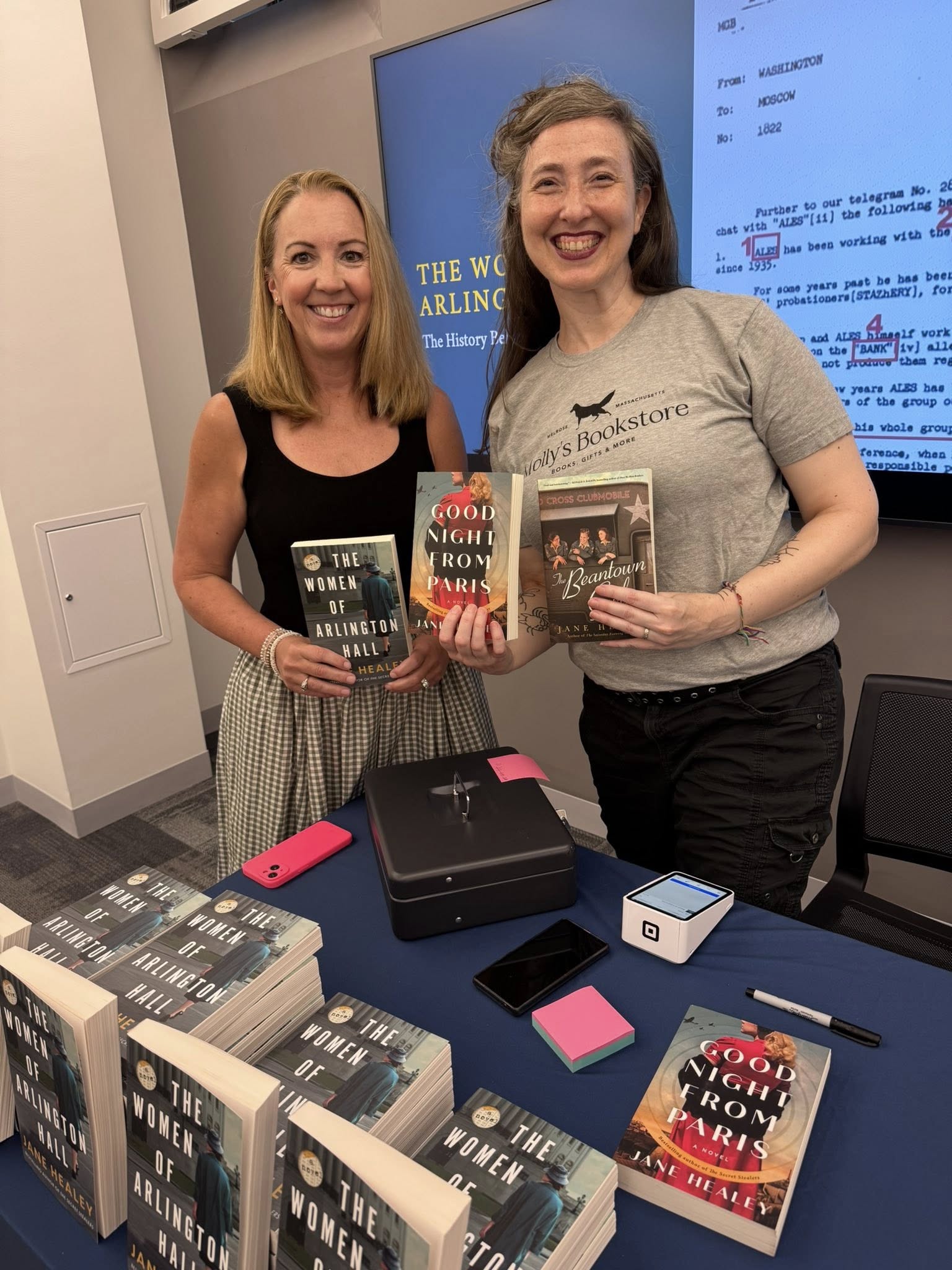
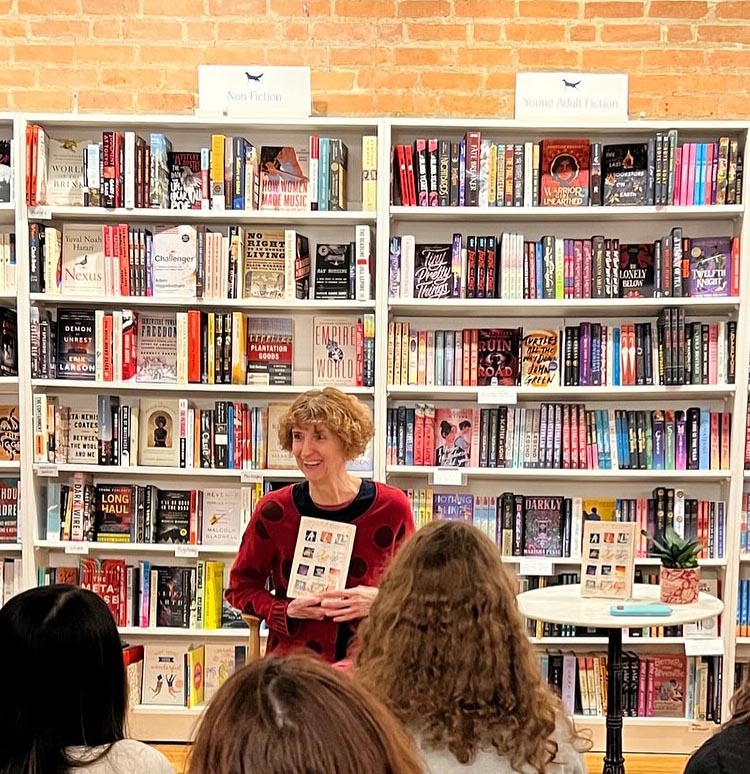
Molly's Bookstore had copies of Healey's books for sale at the event
Photo Credit: Nancy Clover
“They were patriots,” she went on, “with a steely commitment to public service and an almost familial devotion to one another. They couldn’t tell anyone else about their work, and they were often living together down the street, so they all became close friends.”
Healey did extensive research for the book, which included looking at some of the actual decoded and translated telegrams that have been declassified. Her main challenge in writing this book, she told the audience, was making a complex and potentially dry subject accessible and exciting to her readers.
“Codebreaking is complex, and also really boring,” said Healey, “so I was worried I was going to put people to sleep in the first three chapters. But in writing, we talk about showing, not telling, so I couldn’t just say my main character was a codebreaker without telling readers more about what that was.”
“The codebreaking project was massive,” she went on, “and I had to distill it so the book wouldn’t be 800 pages. I thought: How do I make sure people understand the essence of the historical facts and also keep it entertaining?”
“I was really intentional about it before I started writing,” Healey explained. “My goal was to write more of a friendship story, although it would also be part love story. And, of course, it would be all spy thriller. I knew the book had to have high external stakes - Stealing the atomic bomb? That will work! - emotional resonance, well-drawn characters, and a Hollywood-style ending.”
While the central characters in Healey’s novel are fictional, they are based on real people. “That gave me freedom to write the story how I wanted,” she explained.
Healey explained that she started by coming up with the book’s premise - a young woman upends her wedding and her life to come work on the codebreaking project. The main character’s struggle as a woman who has never found her place - a working-class girl attending Radcliffe College, who didn’t fit in either with her upper-class classmates or the other girls in her neighborhood - would find where she belonged when she got to Arlington Hall. “It’s about this woman who’s ambitious,” said Healey, “who wants something more out of life.”
While Healey’s main goal in writing is to entertain and educate her audiences, her novel has already resonated on a deeper for some readers.
“I got a letter from a reader whose mother was a code girl,” said Healey, “and she said she recognized so much in the story. That’s the type of stuff you live for as an author.”
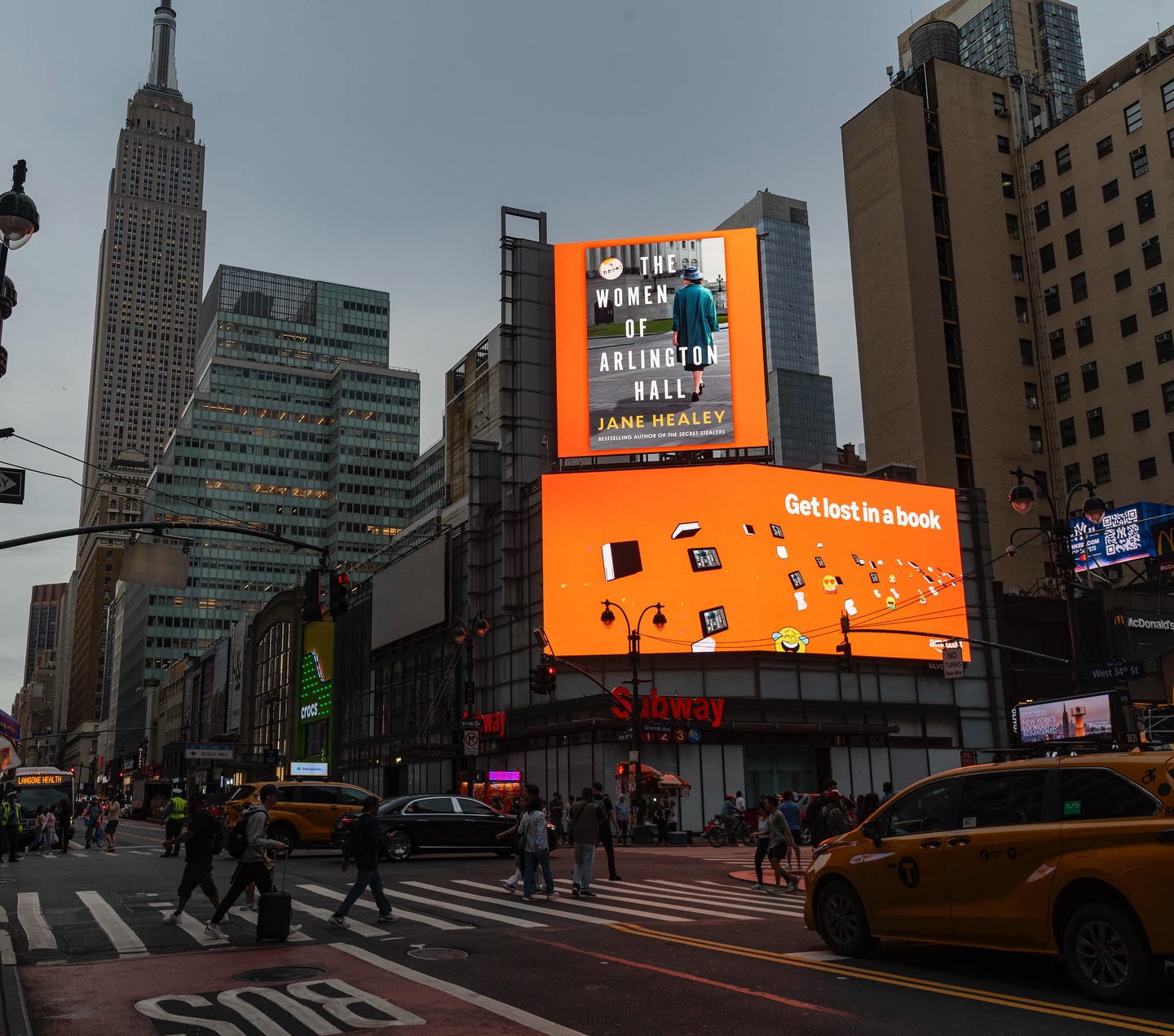
Healey's billboard at Penn Station
Photo From Jane Healey
Speaking more broadly about her work as a historical fiction author, Healey explained that she writes in the genre because she likes having something - a person, place or event - that provides a jumping-off point for her work. “I have a friend who writes spicy hockey romance,” she quipped, “and I could not do that in a million years.”
She described how she has found a supportive community among historical fiction authors, which she helps promote with her book recommendations and her podcast. “That’s been the best surprise about writing and getting published,” she said. “All the other historical fiction authors I know know it’s so hard, and it’s getting harder to break through and get attention and readership for your books. We all really support each other and lift each other up, and we don't feel competitive. We’re all thinking, if I do well, then the next person will, too.”
One audience member asked Healey about her book covers, many of which show women facing away from the viewer. “The theory is that people want to imagine what the characters look like themselves, so they don’t want to see faces on the cover,” said Healey, “but the publishers are definitely rolling their eyes because there are so many ‘women facing away’ covers. At some point, the trend is going to die!”
“How does it feel to have a billboard?” asked one audience member.
Healey explained that her editor surprised her with a billboard outside Penn Station in New York. When she drove down to New York and saw the billboard in real life, Healey said, she burst into tears.
“My agent told me, ‘I hope you know that’s never going to happen again.’ It was bananas!”
Healey’s books, including The Women of Arlington Hall, can be found at Molly’s Bookstore. Audiobook versions of several of her books can be found on Molly’s store on Libro.fm. More information about Healey's books and her future appearances can be found on her website.