City Council Approves Demolition Delay Ordinance
By Ellen Putnam
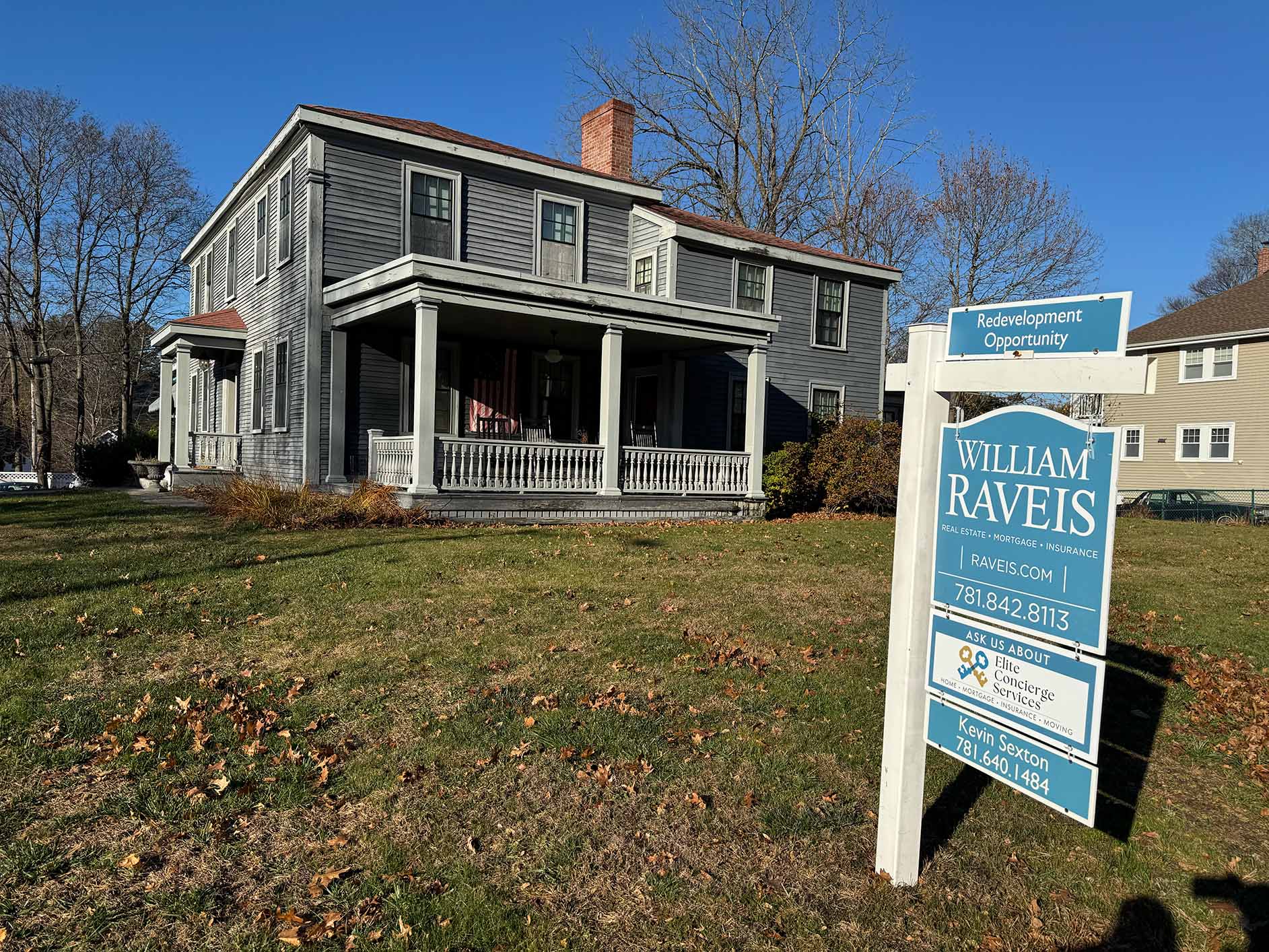
The Benjamin Lynde House at 244 Main Street
On Monday evening, the City Council approved a demolition review (“demo delay”) ordinance that will involve review by the Historical Commission any time a property owner proposes to demolish more than half of a building that was built in or before 1899.
The demolition delay ordinance arose out of a flurry of discussion and social media activity when the Benjamin Lynde House at 244 Main Street went up for sale last month. The home was originally built in 1693, and belonged to Benjamin Lynde, who fought in the Battle of Lexington and Concord.
244 Main Street is being marketed as a “redevelopment opportunity” along with its neighbor at 236-238 Main Street, and while no one has purchased the property yet and no plans for development have been filed with the city, residents are concerned that the house could be demolished to make way for a larger, multiunit building.
The ordinance approved by the City Council does not prevent a building from being demolished, but, if a building is deemed historically significant, the city can delay its demolition for up to a year. In that time, the property owner can collaborate with the Historical Commission to discuss alternatives to demolition or, if the owner decides to go through with demolition, to determine what can be done to preserve its memory.
The City Council’s Legal and Legislative Committee discussed and refined the ordinance at their meeting last week.
Diana Cafarella, who identified herself as a member of the Daughters of the American Revolution and the creator of the Save the Benjamin Lynde House group on Facebook, spoke during the public comment section of that meeting, reflecting, “This house has seen all of Melrose’s seasons, and now it’s our turn to protect the home.”
Rob Tullis, who is a member of the Historic District Commission, also spoke, noting that “the Lynde House kicked this discussion into high pace, but it’s not the only building in Melrose that deserves additional inspection at a time when it’s under threat.”
Jim Bennett spoke during public comment about a previous attempt at passing a demolition delay ordinance in Melrose, when he was chair of the Historical Commission in 2017. He noted that the Commission had worked on a draft ordinance for two years, with the goal that Melrose “would join the vast majority of municipalities in Greater Boston who have a demolition delay ordinance on the books.” But after Rob Dolan resigned as mayor, Bennett said that the draft ordinance “was filed away and never given serious consideration again.” He called demolition delay “a smart tool - not the enemy of development or dense urban growth.”
When the Benjamin Lynde House came on the market, city councilors Cal Finocchiaro and Ward Hamilton (who himself previously served on the Historical Commission, and works in historic preservation) worked with city staff to draft an ordinance based on the one that is used in Somerville.
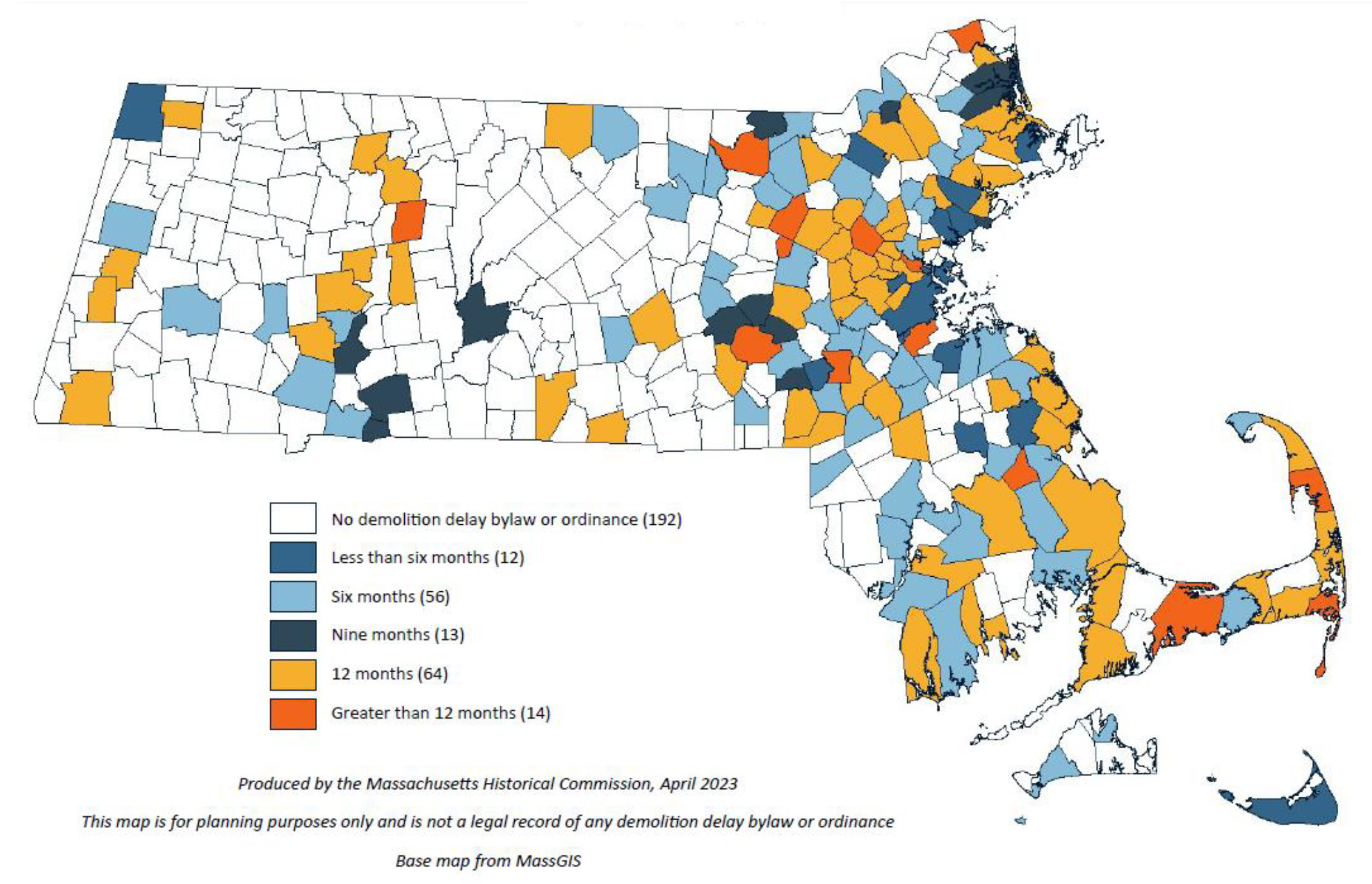
Municipalities in Massachusetts with demolition delay ordinances
From the Massachusetts Historical Commission
All of the cities and towns that surround Melrose, with the exception of Stoneham, have some kind of demolition delay in place, although the delay timeline varies from a few months to over a year - and the structures that are included in demolition review in some municipalities might be as new as 50 years old.
“The Historical Commission is not looking for demolition delay in order to stop development,” said Historical Commission Chair Shane Egan, “We’re just looking for sensible way to pause and say, ‘Wait a second, let’s analyze if this particular structure is of historical value and should be saved or adjusted so we can honor its history.’ It’s not always a situation where the house stays the same and doesn’t change at all, but we want to make sure the home retains its historic significance.”
“Demolition delay does not prevent demolition,” added City Planner Lori Massa, “it just provides time to consider alternatives. It might result in photo documentation; architectural renderings of the building; inventorying the property; identifying salvageable materials; or making a plan for the installation of signage at or near the site.”
The initial proposed ordinance suggested review for any building over 100 years old, which would have included over half of the buildings in Melrose. Massa noted that, over the last three years, Melrose issued nine permits that involved demolishing a building that was over 100 years old.
“Demolition delay is the lowest layer for protections for buildings,” explained Hamilton. “The next layer is the creation of a local historic district, which we are planning to do for this building.”
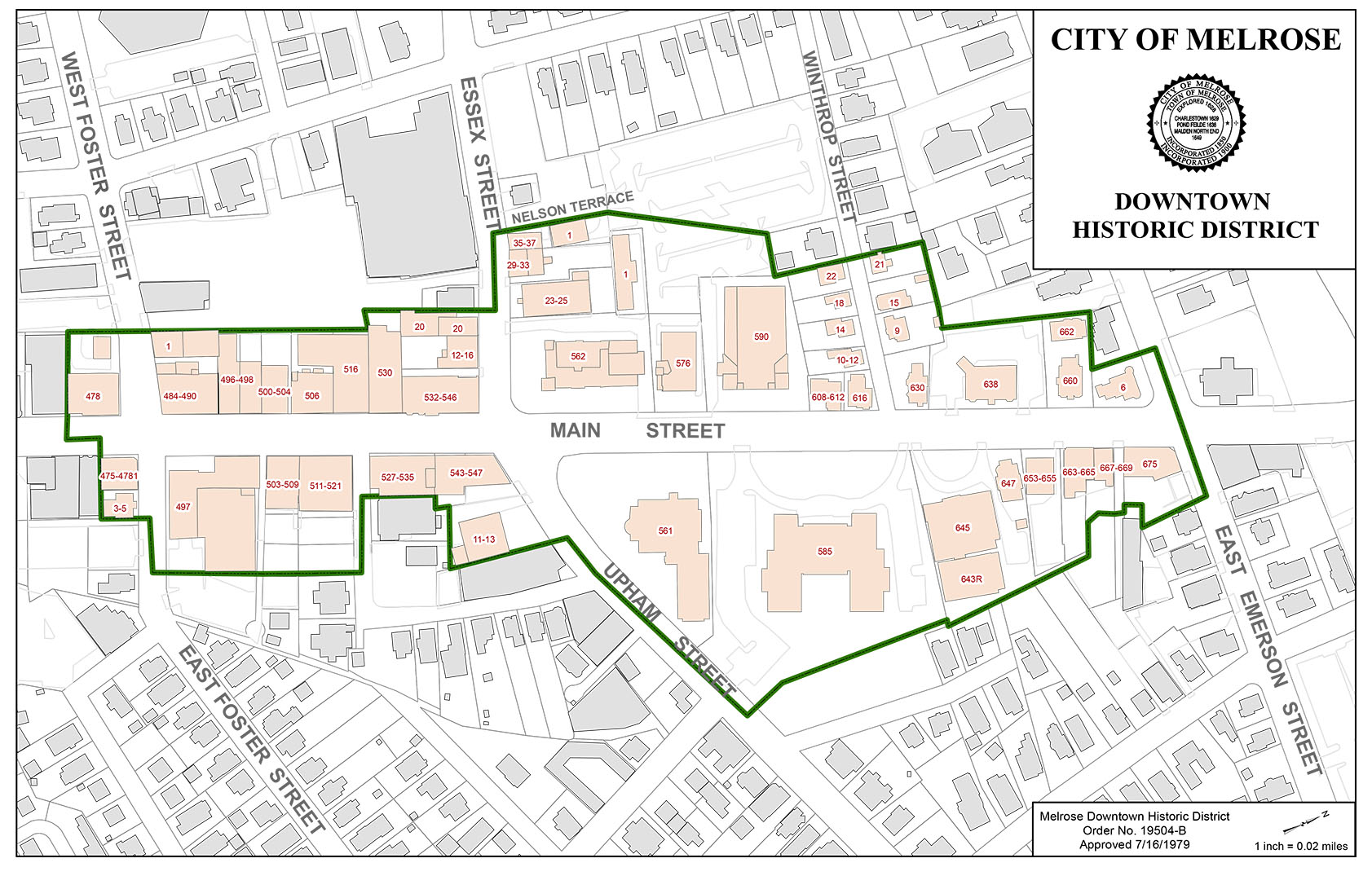
Map of the Melrose downtown historic district
From the City of Melrose
Melrose has a historic district on Main Street between Emerson and Foster Streets, and the city’s Historic District Commission exercises control over what can be done to the exterior of buildings within this district. The city can extend that district to single buildings in other parts of town, although that process would take longer than adopting a demolition delay ordinance.
“We’ve started a discussion with the Historic District Commission and the Historical Commission to work collaboratively to discuss creating a single-building district for the Benjamin Lynde House,” said Massa, “and that process can happen at the same time as adopting this demolition delay ordinance. The delay could give the community time to create a local historic district, which is a way to preserve a structure.”
“I feel that this is a planning tool that injects historic preservation as a community goal,” said City Councilor Ryan Williams. “It’s a way to balance housing development with architectural preservation.”
“Most communities have demolition delay,” noted Massa, “and developers who aren’t familiar with Melrose ask what our delay period is - they factor that into their permitting already. It often takes a long time to permit projects, so they’re able to start the process and still get results. A lot of communities that build a lot of housing have demolition delay - it’s not a barrier.”
While most city councilors were supportive of the overall goal of establishing demolition delay, some felt that legislation shouldn’t be pushed through too quickly.
“It feels like the process is being rushed to save one house,” said City Councilor Robb Stewart. “I think the Lynde House is a very important building, but in this process, it shouldn’t be the means to the end.”
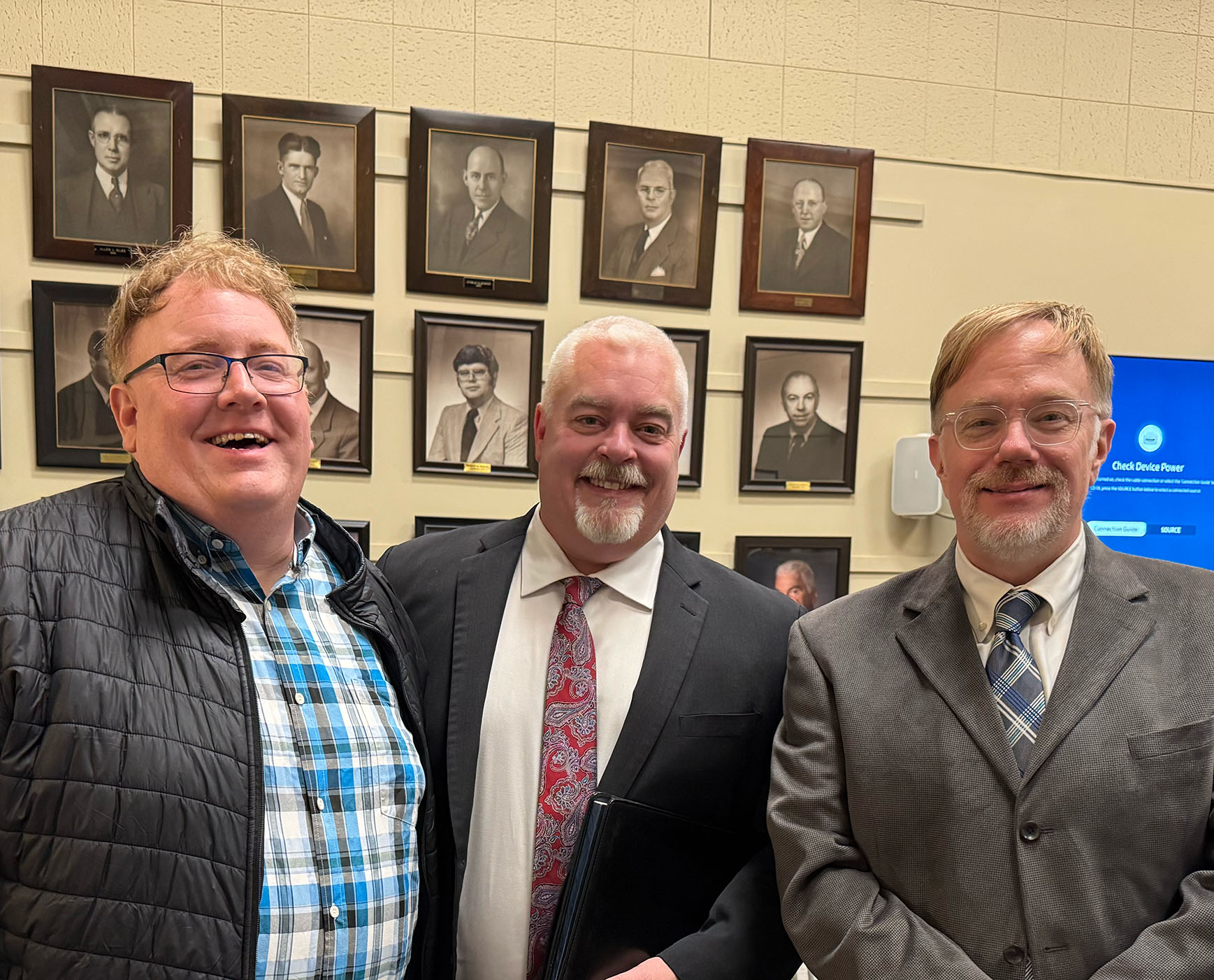
Left to right: Former Historical Commission Chairs Jim Bennett and Ward Hamilton (who is also a city councilor) and current Historical Commission Chair Shane Egan
Crafting new legislation in the City Council is often a slow and careful process. New ordinances require a two-thirds vote in the City Council, in contrast to other votes, which require only a simple majority. Earlier this month the City Council approved a new food truck ordinance that came out of the Legal and Legislative Committee - a process that began last year, and involved one draft ordinance that left the committee but failed to gain the approval of the full City Council.
“It does feel very rushed,” Finocchiaro acknowledged, “and obviously the Benjamin Lynde House got this going, but we’re not reinventing the wheel. This is Somerville’s revised and refined ordinance that multiple parts of our administration have looked at, and they’re knowledgeable in this area. I feel like we have a really great ordinance put together. We didn’t pull it out of thin air.”
“Establishing a demolition review ordinance was discussed in both the 2004 and 2017 master plans for the City of Melrose,” she went on, “And now we’re here, years later, without one, and we’re finding ourselves scrambling to figure out something. I think this is something that should be part of our community, and we shouldn’t wait ten more years to find ourselves in another situation like this.”
While the Historical Commission, the Historic District Commission, and some members of the Planning Board expressed their support for the ordinance, other members of the Planning Board were more hesitant, and no feedback was offered by the Zoning Board of Appeals or the Inspectional Services Department, which is responsible for granting building permits.
“I can’t support this right now,” said City Council President Leila Migliorelli. “We need more input from other organizations within the city. When we worked on the legislation for food trucks, we held it in committee until we had a final, clear draft. I would feel more comfortable getting feedback from all the stakeholders in the city before we take a final vote.”
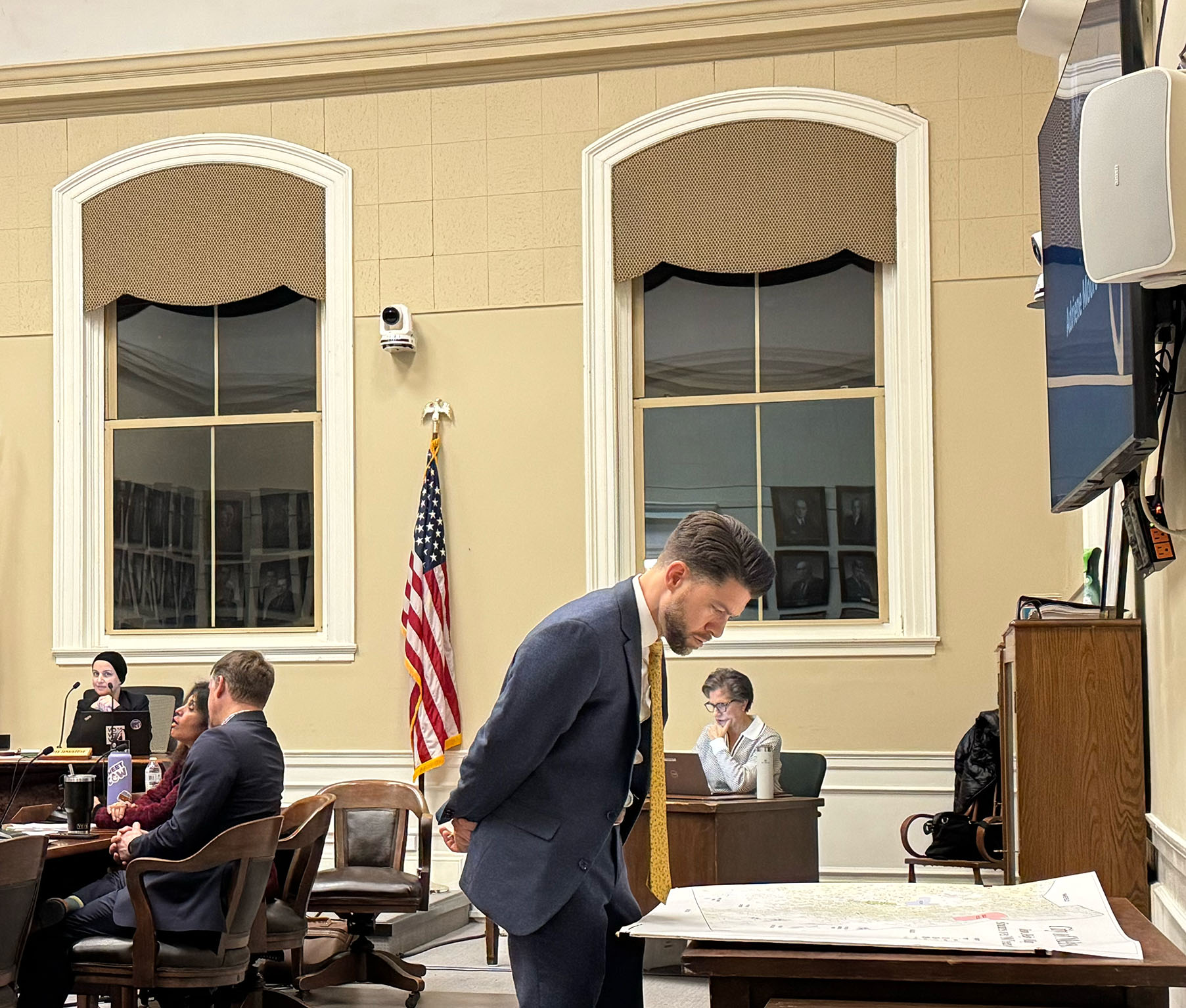
Other city councilors agreed that they would prefer a more deliberative process, although Hamilton argued that “time is literally of the essence. If someone walks into Inspectional Services tomorrow morning and applies for a building permit,” he said, “they’re going to be grandfathered in. If I owned 244 Main Street and I was advertising that building to be attractive to developers, and I knew this meeting happened tonight, I would hurry up and apply for a building permit to demolish the building.”
“I really appreciate the robust discussion,” said City Councilor Kim Vandiver, who represents Ward 5, where the Benjamin Lynde House is located. “One of our colleagues at one point commented that we should not be so timid to work on legislation and ordinances - and I agree. I think this is great.”
In the Legal and Legislative Committee last week, the ordinance received a recommendation from committee members Maya Jamaleddine, Devin Romanul, Mark Garipay, Finocchiaro, and Vandiver, and a “No” vote from Migliorelli.
When the legislation went before the full City Council this week, Bennett returned to public comment to express his support for amending the ordinance, possibly at a later date, to return to the initially proposal that all buildings over 100 years old be included in demolition review.
Former Mayor Paul Brodeur also spoke during public comment, and expressed some ambivalence about the ordinance. “It’s not a bad idea,” he reflected, “but it’s all in how it’s executed.”
Brodeur also noted that some of the surrounding communities that have demolition delay ordinances have also passed the Community Preservation Act, which allows the city to levy additional property taxes to be matched by state funds, which can be used for affordable housing, historic preservation, open space, or public recreation. “I suspect no one is too excited about talking about the another potential tax increase going before the voters,” he said, “but if you really want to protect a property permanently, the City needs to intervene more aggressively - they need to buy it.”
During discussion in the full City Council, Finocchiaro noted that the mayor will need to amend the city’s administrative code in order to make the Historical Commission a regulatory committee, rather than just an advisory committee, in order to allow it to conduct demolition review. The City Council will need to approve that change before the demolition review ordinance can take effect.
Migliorelli, who had been the only “No” vote on the Legal and Legislative Committee, explained that, after having spoken with several members of the administration and seen a clean copy of the ordinance, she felt comfortable approving it. All nine city councilors who were present at the meeting voted to approve the ordinance. (Ward 2 Councilor John Obremski and Councilor At Large Maya Jamaleddine were not present at the meeting when the vote was taken.)