Candidate for School Committee: Jennifer Razi-Thomas
By Ellen Putnam
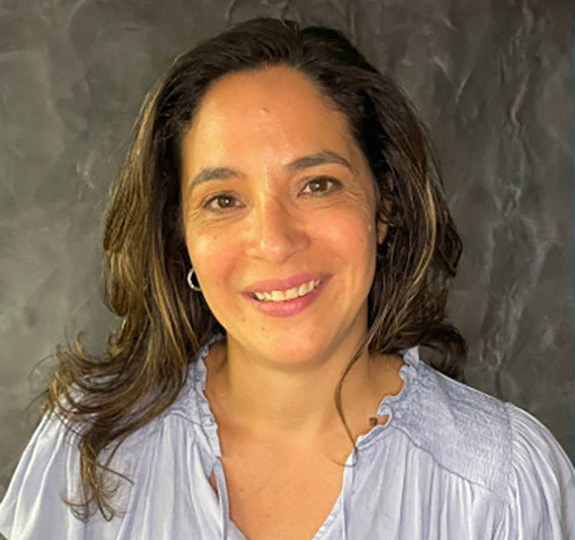
Photo From Jennifer Razi-Thomas
Jennifer Razi-Thomas is running for a third term on the School Committee because, she said, “it’s so important to support the schools right now, given where we’re at with the budget and teacher layoffs and having a new interim superintendent. It’s been an honor and a privilege to serve our children and families and educators, and I hope that, by the end of this term, the district will be in much better shape than it is now, and I hope to help it along.”
Razi-Thomas is a clinical social worker and works at a competency-based high school that is part of the Salem Public Schools. “I work with young people all the time in my day job,” she said, “and I understand what high-risk teens and kids need to thrive based on over 30 years of experience as a social worker.”
“Having worked in a public school for 15 years,” she added, “every decision I make on the School Committee is informed by my work at my school.”
Razi-Thomas’s background is somewhat unusual for a School Committee member - she not only serves on the leadership team at her school, but she also serves on the negotiating team for the teachers’ union in Salem. “We just negotiated a contract that, for the North Shore, was outstanding, and I am very proud that we did not strike - we got a huge increase that was well due to our educators.” Having sat on both sides of the bargaining table for negotiating teacher contracts is likely to be useful experience for Razi-Thomas as the School Committee prepares to bargain with Melrose’s teacher union again next year.
“I’m a social worker, so I can see all sides of an issue,” Razi-Thomas said, “and I pride myself on being a really independent thinker around voting and making decisions. I love talking to people - I’ll talk to anyone about anything at any time. And I’m pretty open-minded - I have very strong opinions, but I’m still going to listen.”
Razi-Thomas sees her eight years of experience on the School Committee as a strength during a time of transition for the organization. Not only is Melrose now on its fourth superintendent in as many years, but Razi-Thomas is the only current member of the School Committee running for reelection this term, and two of the three School Committee members who were elected two years ago had not served before. (School Committee members serve four-year terms, with half of the six-member organization up for election every two years.)
“Having been on the School Committee for eight years,” she reflected, “there’s just so much to learn in the first couple of cycles. Especially with where we are right now, I think it’s really good to have some newcomers on the Committee and also have a few seasoned people remain.”
Razi-Thomas also notes that she has worked under five superintendents during her time in the Salem Public Schools, and she has supervised five superintendents while on the School Committee in Melrose - experience she believes will be valuable as the School Committee launches a search process for a permanent superintendent.
“You learn a lot by watching superintendents,” she reflected, “how they affect you as an employee, how they affect the whole district. It informs my thinking constantly, and I love being able to see all these different perspectives.”
Razi-Thomas sees her work on the School Committee as part of a larger commitment to her political values. “My mom was a Roosevelt Democrat,” she said, “and I was raised on core Democratic values. Frances Perkins is a hero of mine - as a social worker, as the first female in the Cabinet, she set up so many programs that help us every day.”
“I believe firmly that we need to get through the current crisis in the federal government by holding firmly to our values,” she went on, “and there’s nothing more important than public education as an institution for our country. Holding onto the values of freedom and equality and liberation through good policy and programs - that’s what I believe in. We’ve been given so much opportunity in this country, and no one should be discriminated against as an immigrant - instead they should be celebrated for their courage and willingness to come, often with little in their pockets, to try to create something better for themselves and their families. In my day job, I work with a lot of newcomers, and I really enjoy it - I’ve learned so much from them.”
Despite the challenges, Razi-Thomas sees many strengths within the Melrose Public Schools. “We’re really lucky that we have educators who have worked for us for many years. Leaders, too,” she said. “We’ve been able to retain a lot of great people in spite of the fact that we don’t pay as well as other districts, because our teachers and leaders love it here. And that includes our current Interim Superintendent, Cari Berman - she’s been in our district for over 20 years. And people like Leslie Means, the president of the union, who has been working in Melrose for 19 years.”
“Our elementary schools are amazing,” she added, “and our principals are tremendous.” And while the elimination of the middle school principal position was not ideal, Razi-Thomas said, “we knew that we had great leaders at the high school to tap into” to fill in that gap.
“There are many educators across the district,” she continued, “who this year are holding it together under very hard circumstances. They don’t have enough resources. They’re doing an excellent job with what they have, but they could do a better job with more resources, instead of having to worry every year about how much less they’re going to get, how many colleagues they’re going to lose.”
“Our families are amazing,” Razi-Thomas added. “So many parents are willing to be involved. They foster a good partnership between home and school. And we have phenomenal students. And a great community - all these interconnections between school and businesses are lovely, and we need to foster that more. People are constantly willing to offer their time and energy to improve things for kids across the community.”
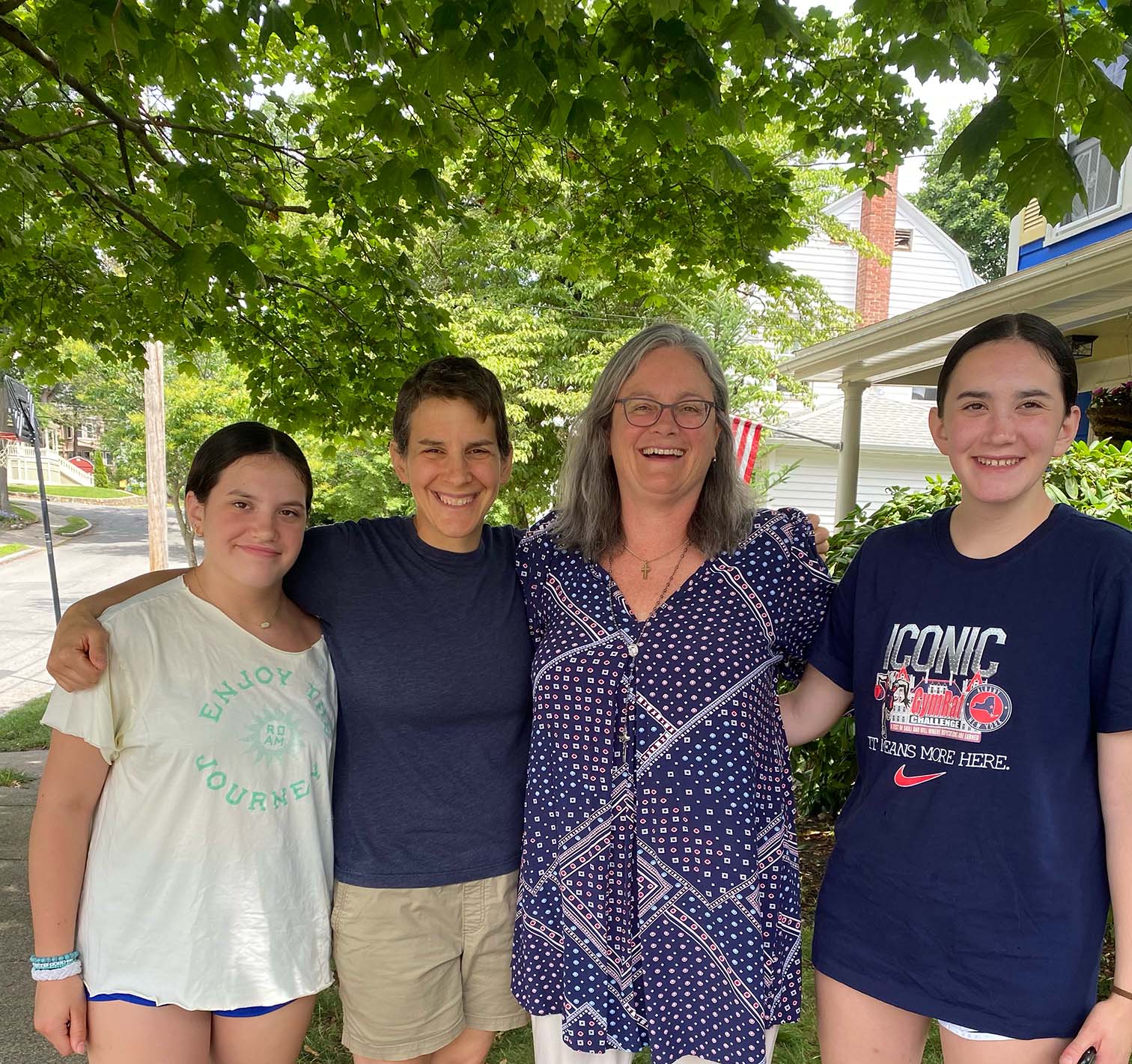
Photo From Jennifer Razi-Thomas
“Our biggest challenge, obviously,” she said, “is the fact that we are so poorly funded. This is one of the most expensive areas in Massachusetts, and to be at the bottom in terms of per-pupil spending - it’s shocking that we haven’t figured out how to convince people that that’s probably not in the kids’ interest in terms of learning. It’s not something to be proud of.”
“Money isn’t everything,” she added, “but it allows us to do things like have more staff in the cafeteria and the hallways so kids don’t get bullied - that’s just one example of having more resources as opposed to less.”
“If we have more educators in leadership positions to evaluate staff, then we can raise the standard of what we expect from teachers,” Razi-Thomas went on. We can teach new teachers to be fantastic in the classroom so they stay in the classroom instead of becoming frustrated and leaving. There is evidence that if you do more to help new teachers learn in their first three to five years in the classroom, they will have a much better experience, student outcomes will be better, and we will retain them - we can create the best and keep the best.”
“We can’t take away more and more resources and expect teachers to do well and educators to stay motivated and students to be supported,” she continued. “Last year’s budget laid off 17 staff, and this year’s cut 30 people. While this year’s cuts didn’t impact the elementary schools as much, they hugely impacted the middle and high schools. Last year, class sizes in the middle and high schools were around 21 to 26 kids; this year, we’re seeing class sizes in the 30s, with some as large as 39.”
“Typically, as kids get older, if they’re in good behavioral and socioemotional shape, they can handle larger classes,” Razi-Thomas went on, “but imagine the kids who are slipping through the cracks right now, especially coming out of COVID. We were as strategic as we could be about cuts - I had faith in what Adam (Deleidi) and Ken (Kelley) were doing, but this budget was really bad for the older kids.”
Razi-Thomas was the only School Committee member who voted against this year’s budget. “I was proud to have voted against the budget,” she said.
“The budget wasn’t as bad for the younger kids,” she added, “but it’s not great - for example, we have no paraprofessionals in the kindergarten classes.” (Melrose has special education paraprofessionals - paras - when they are mandated in students’ education plans, but they support specific students, rather than providing general classroom support.) “Every other district would have a para in every kindergarten class and even in the first grade classes. It’s a small investment to provide support for kids while they’re learning the foundational stuff they need to thrive in school.”
“We do everything on the cheap,” Razi-Thomas emphasized, “and it’s so short-sighted. Kids with disabilities don’t get their needs met here, so we have to send them to outplacements, which are very expensive. We should just invest in doing all the Tier 1 interventions we can do to support kids and their learning in the classroom - it would decrease costs and be better for kids and families in the long term. You can’t avoid every outplacement - a lot of kids just need what they need, even if you’ve done everything right - but, with more resources, we could keep some of those kids in-district and pay less in the long-term.”
As for the override questions that will be on the ballot, Razi-Thomas said, “Any of the override options would be helpful. The first would give us a much better situation. Even with the third option, we’d still be just barely holding on, since it basically keeps things as they are this year, and we’re already understaffed. The first option is by far the best, the second we could live with, and with the third, at least we wouldn’t have to make further cuts.”
“Passing the first option would be tremendously relieving,” she went on. “We’ve been agonizing over the amount of money we’ve had to work with for years now, and it would be tremendous if the community decides to invest in the city and the schools in that way - it’s long overdue. And it would make our district much more attractive to any future superintendent.”
“If none of the override options pass,” Razi-Thomas emphasized, “it’s effectively the community choosing to defund the schools. We’ve already had two years of cuts, and if there’s no override, we would have to have a third year of cuts. We’ve always done more with less - we’ve never been fat, we’ve always been lean.”
If none of the override options pass, Razi-Thomas reflected, “We can encourage the district to look for grants, but that’s not going to be a long-term fix even if it’s a decent-sized grant. It won’t pay anyone’s salary and benefits in the long term.”
Some opponents of the override have brought up the Education Fund that residents can voluntarily contribute to through the city, but Razi-Thomas noted, “the Education Fund cannot hire people based on donations - legally, it can’t. It can pay for things that are usually paid for through the PTOs, but the idea that we can do everything through fundraising to me, is irresponsible. It’s not a predictable source of revenue.”
More cuts to the schools next year, Razi-Thomas said, would mean “we would have to start to make class sizes larger at the elementary schools. It would probably make more people choose to send their kids to private schools, which is bad for the district. We could close a school - that’s pretty hard to do and we don’t want to do that. But those are the options for next year if we don’t pass an override. I don’t think that continuing to raise class sizes at the middle and high schools is right.”
“I would like to see us fully fund our schools with Question 1A (the $13.5 million override),” she concluded. “It would give us a few years of breathing room. Then we can strategically hire for the positions that we can bring back. We can be very thoughtful about our next steps in the district - see what the needs are, what the data and assessment scores say, and decide how to rebuild.”

Photo From Jennifer Razi-Thomas
Outside of financial challenges, Razi-Thomas said, “It’s tremendous that our new superintendent (Cari Berman) is focusing this year on Tier 1 instruction, Universal Design for Learning principles, and the belief that every kid can learn - just those three concepts can be guideposts for our district. I think we need to focus on school improvement plans - we haven’t really had those since before the pandemic, but they need to be tied to our mission and vision as a district. Then, if we have that consistent leadership in every building, we can see how our assessment metrics line up with our vision and improvement plans, and watch them improve over time.”
“The School Committee isn’t responsible for day-to-day operations,” she went on, “but we should be looking at data at a high level. School improvement plans will help us know, on a building-based level, how kids are doing, and they will help us know where the resources need to go. Whether an override passes or not, we need to know where we need more reading instruction, more writing instruction, which grades are still behind after COVID, which cohorts need more work.”
Razi-Thomas also thinks about how nationwide challenges make their way into Melrose classrooms. “Across the country,” she said, “scores have gone down in reading and math over the last few years, and I believe it’s because families don’t read at home, and because of our continued addiction to our devices. If we as a community can commit ourselves to reading, and our schools can figure out the right balance between using Chromebooks and pen and paper, then I think we will watch our test scores go up. I see it as a marriage of policy and technology and good instructional practices and data-driven assessment monitoring - all of those things need to keep working together so every kid can be getting what they need to learn.”
“When we think about the impact of technology on learning,” she went on, “our entire educational system across the country, if not the world, is trying to figure out the right amount of blending technology with learning, and the right amount of pencil-to-paper learning. We know that having kids on cell phones and on devices leads to poor mental health outcomes, and parents need to partner with the schools, from when they first hand their kid a screen through when they give their kid their first cell phone. It’s ever evolving, and we don’t even know the impact that all this technology will have on kids’ intellectual and socioemotional development - they’re guinea pigs, and COVID just accelerated it.”
Razi-Thomas was also “very proud we approved a free speech protections policy. Our librarians told us we needed to work on this, since there could be people trying to get books off of our shelves. They worked on it for a long time, and it’s a step-by-step process - if someone complains, where is it sent, how is it reviewed to determine if it’s legitimate curriculum and if it stays or goes.”
Razi-Thomas has two daughters who attend the Melrose Public Schools. She played 16 years of rugby at the college and club level, and is a huge fan of women’s sports. She also loves pickleball, music, and hiking. “Part of what I do at work is take kids out on adventures,” she said. “We do an overnight with the kids with two days of hiking. With all the technology, some kids don’t go outside these days - but kids have to have a relationship with nature if we’re going to protect Mother Earth.”