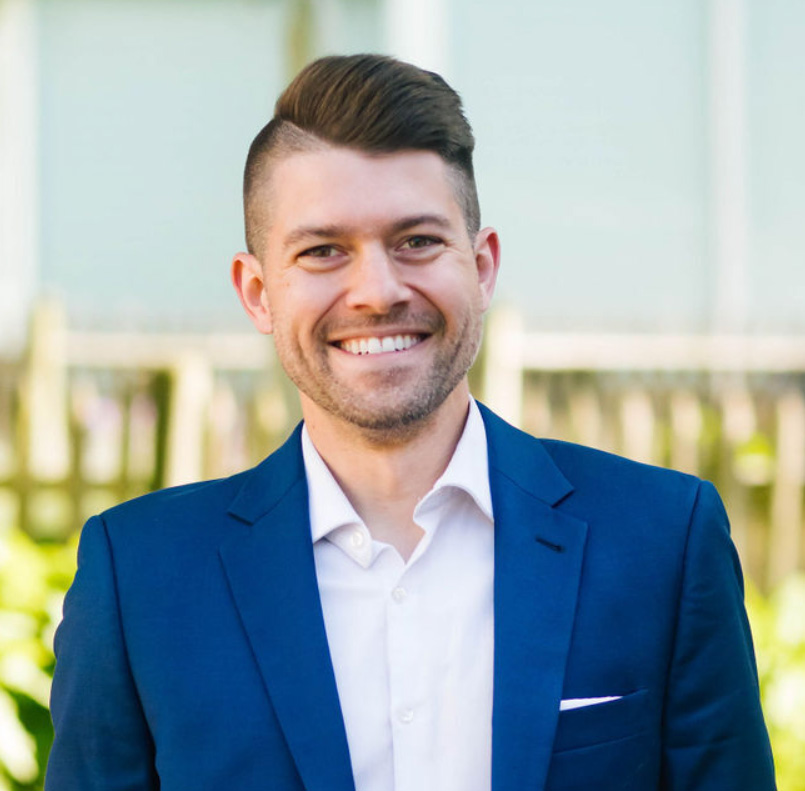
Candidate for Ward 7 City Councilor: Alex Rodriguez
By Ellen Putnam
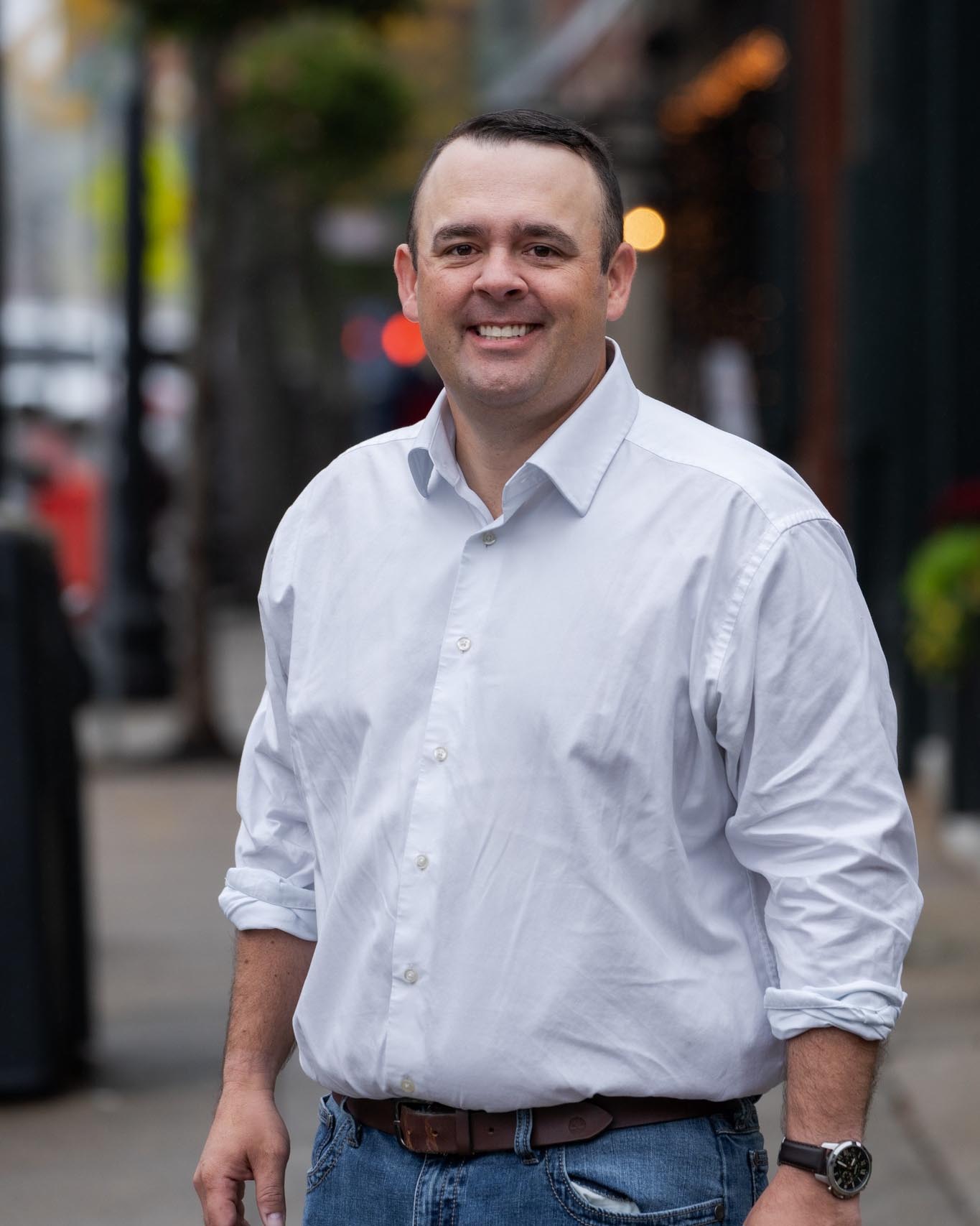
Photo From Alex Rodriguez
Alex Rodriguez is running to represent Ward 7 on the City Council because he wants “to make sure that Melrose stays a great place to grow up and grow old” and to challenge what he sees as a culture on the City Council where hard questions are not asked and substantive debate is discouraged.
Rodriguez has a Masters degree and a Doctorate in Business Administration. He has worked in marketing and user engagement in the private, public, and nonprofit sectors, and has taught and lectured at several local colleges. Currently he owns a consulting firm dedicated to customer retention strategies.
Rodriguez and his family have lived in Melrose for almost a decade, and his two children attend the Melrose Public Schools. He volunteers at the Hoover Elementary School and coaches Little League.
“I really believe we live in an incredible city,” said Rodriguez, “I don’t look or sound like most people who grew up here” (Rodriguez’s Texan roots come out in a hint of what he calls a “chicken-fried accent”) “but my family and I have been welcomed with open arms. Melrose is a great place for kids to grow up and thrive, and I’m running for City Council because I want it to continue to be an attractive place for our kids to raise their own kids.”
“At the end of the day, I’m just a dad,” he went on. “I’ve had a front row seat to the critical issues the schools are facing, and, like any rational parent, I’m nervous as to the financial sustainability of the school system. I’m worried about what the educational experience will look like if the dam breaks. Volunteering at the Hoover library, I’ve watched our teachers pull off daily miracles with little to no resources, but in the not-so-distant future they just won’t be able to do that, and the consequences could be catastrophic to our kids’ educational experience, and to our home values.”
Rodriguez described how he saw this happen in Houston in the 1980s, when oil prices fell and the city’s economy was badly hit. “It killed our part of town,” he said. “I vividly remember seeing several homes foreclose on our street. This is real, and it can happen. It’s not just fictional. In the case of Houston, it was created by external economic circumstances. But we have a choice as to whether we experience this or not.”
“We need people on the City Council who will not let this just happen to our kids,” he went on, “without stimulating a fact-based debate that drives real solutions for Melrose.”
In Rodriguez’s view, “We don’t have an oversight culture on the City Council right now. And oversight is so important because that’s the means by which we develop trust with our residents. As time goes on, the City Council just turns into a rubber stamp for the mayor, and that has unintended consequences: we lose accountability in local government.”
“The reality is,” he continued, “the right questions aren’t even being asked right now. We should have real disagreement - collegial, substantive, but a real debate. My background gives me experience in being able to ask the toughest questions at the toughest times. I have no problem doing that.”
“I’m a businessperson,” Rodriguez added, “and I love a spreadsheet. I’ve done budgets in the public sector as well as for private companies and nonprofits. I have a deep understanding of the structural budget challenges we face under Proposition 2½. Fundamentally, we’re on our own if we want to set Melrose on a path to a sustainable future.”
Rodriguez’s background is part of what is driving him to run for City Council. “I’m the son and grandson of combat veterans,” he said. “I’m descended from Mexican immigrants, sharecroppers, and trailblazers. They have given me a very deep faith, and taught me to stand up for those who are marginalized; to uplifting the least, the last, and the lost.”
“Kids don’t vote,” Rodriguez went on, “and they don’t have a lot of say in what goes on at their schools, so they have to trust adults to fight for what they need. The North Star in Melrose has to be about our children: is this a good place to raise kids? When we look at pieces of legislation, that has to be the first, second, third, fourth, and fifth priorities. This is about our kids, and what they deserve.”
“If you’re a parent of a child with special needs,” Rodriguez added, “you deserve to be supported by the community, not be a financial afterthought.”
“My family is a constant reminder to me of why I’m here,” he concluded, “to build bridges in our community and to deliver measurable results.”
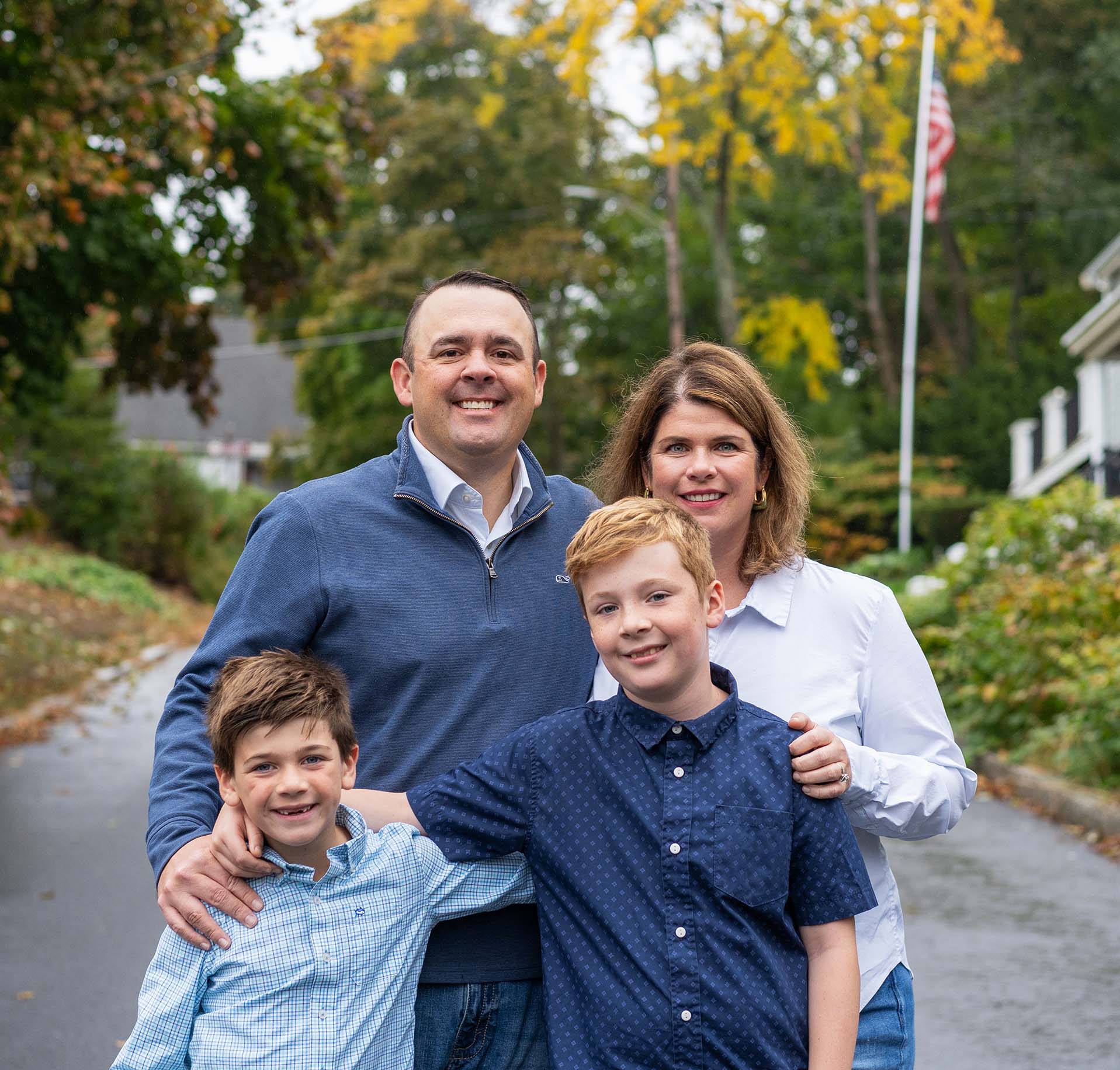
Photo From Alex Rodriguez
For Rodriguez, what makes Melrose so special is “the neighborliness that is embedded in the culture across generations. We really care for each other, in good times and in bad. It’s not unique to Melrose, but it’s very tangible here. It’s a really inclusive community, welcoming to people who are different. My family is still relatively new, but we’re engrained in the community as much as someone who’s been here for generations.”
But he sees the polarization that has been happening at the national and state levels as a threat to the community.
“Our local body politic is evolving into a shape that is unhealthy,” Rodriguez argued, “Party identification has seeped into our nonpartisan elections, and this kind of environment makes it difficult to hold incumbents accountable. We’ve seen how this plays out at the state and national levels, and I don’t think anyone can argue that it leads to successful governance.”
While Rodriguez, now an independent, worked for a Republican senator early in his career, he has seen his own views skew to the center as the Republican Party shifted rightward. Although Rodriguez has voted for candidates from both major parties, he said, “I’m not a member of any political party, and I will reject support from any political party. I will not accept a public endorsement from anyone in office. I’m proud of running this kind of campaign. I would rather lose than be accountable to anyone who expects you to throw objectivity out the window when you get into office.”
Rodriguez is also in favor of term limits for the City Council: “I don’t think this should be someone’s permanent position,” he said, “and I’m committed to not seeking higher office.”
One role Rodriguez sees for the City Council is lobbying state officials for more options for Melrose to generate more revenue to meet rising costs.
“We have obvious financial constraints as a community that relies on residential property taxes,” Rodriguez explained. “They’re not unique to us - we see them in other bedroom communities. It makes us really vulnerable to economic pressures. We’re not set up to absorb economic shocks. Right now, overrides are the only solution at our disposal, and desperate times call for desperate measures. But our leaders need to realize that relying on the electoral system and the political whims of the moment to get the funding we need to deliver public services - schools, public safety, services for veterans - is not sustainable in the long term.”
“Right now, there’s no political will to address Proposition 2½ at the state level,” he continued, “but we need to pressure our state delegation to not sit silent when the governor tries to address municipal taxation in ways that are not beneficial to Melrose.”
Rodriguez suggested that one possible avenue for generating more revenue might be to push the state legislature for some sort of home rule legislation related to taxation that would apply only to Melrose. “No one wants to discuss it,” he said, “but we don’t have a choice anymore. We need to figure out how we can deleverage ourselves from property taxes. It’s high risk to have this much revenue coming from one source. We will get to a point where we do price people out of the market - so Melrose might still be a great place to grow up, but it won’t be a great place to grow old. And say we pass the override in the fall: what about the next one? We will find ourselves in the same position unless we take action now.”
While Rodriguez wants to seek alternate avenues for taxation in the long-term, he is emphatic in his support for all three tiers override questions that will be on the ballot in November. “Our financial challenges are very real,” he said, “and we’re in this situation because of structural revenue issues, not mismanagement.”
“By opposing the override as it is written,” he went on, “you are tacitly supporting cuts to services that veterans earned through their blood and sacrifice. You are voting for fewer public safety employees, inevitable school closings, higher student-teacher ratios. We could be looking at a potential state takeover of our schools in the not-too-distant future, which would kill our property values. The biggest concern I hear from Ward 7 residents is that our roads are awful, a disaster. If the override fails, those roads aren’t going to fix themselves.”
“The consequences of the override’s failure are far more problematic than the consequences of its passage,” he concluded.
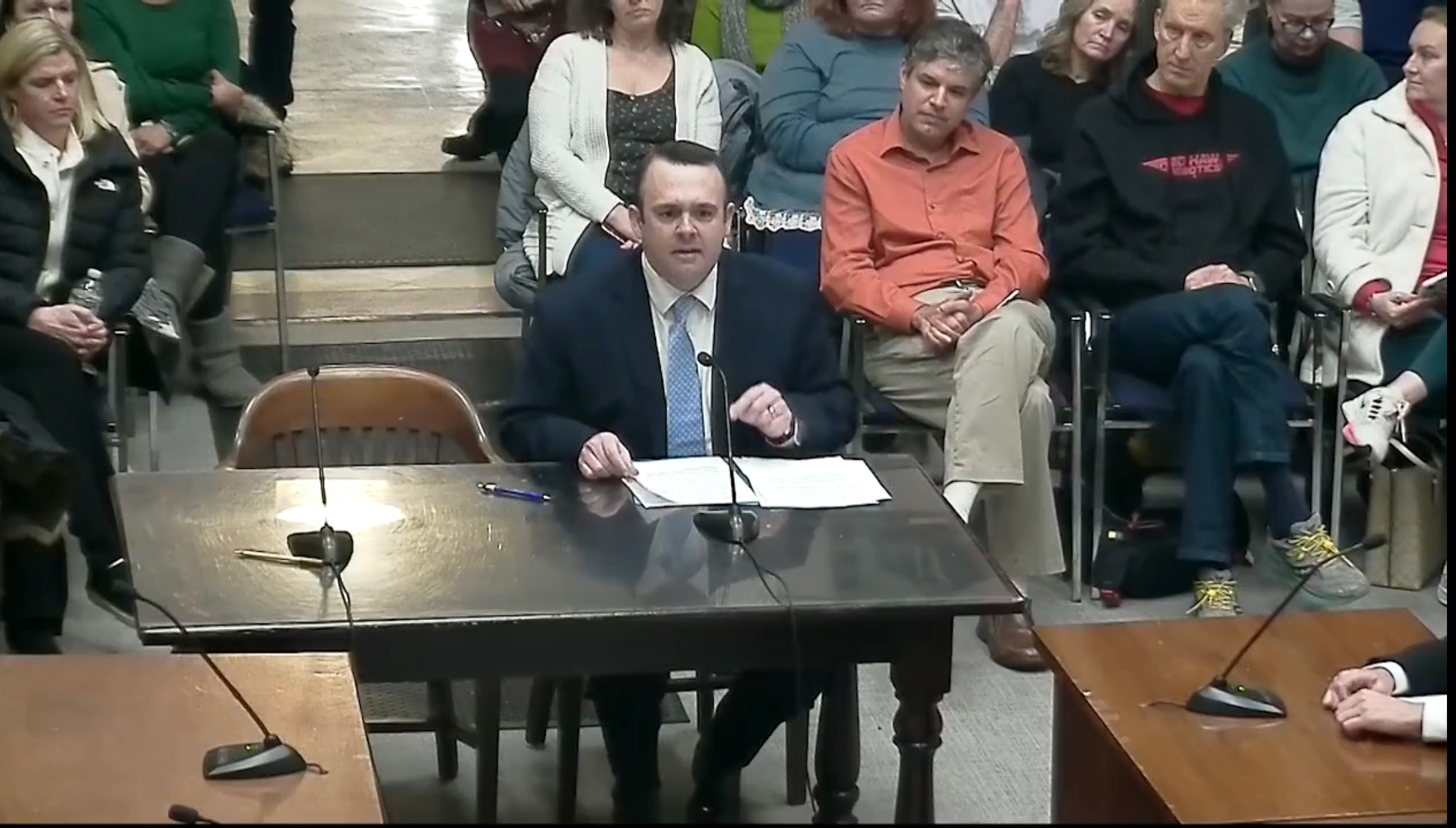
Rodriguez speaks during public comment at a City Council meeting this spring
Screenshot from MMTV
Rodriguez’s criticism of the budget the City Council approved for this year is not because he believes any of the items in it aren’t worth spending money on, but because he believes the budget did not sufficiently prioritize the Melrose Public Schools over other expenditures. “Budgets are a reflection of our values and priorities,” he said, “and you have to ask yourself: where did our kids fall in those priorities? We’ve heard from elected officials for a long time about how much they care about our kids, but if that were the case, you would be making every effort to fully fund the schools and leave other parts of the city more vulnerable. Why is so much school funding leveraged on the passage of the override?”
“The culture on the City Council has attempted to minimize debate in a public setting on the mayor’s initiatives,” Rodriguez went on, “I believe that culture has extended outside the Council, and it hurts the city when we need to have robust debates, not silence dissenting opinions.”
“We need oversight and accountability to build trust,” Rodriguez continued, “We can’t pass an override and then just say, ‘here’s a check and then we’ll never ask about it again.’ We need oversight in order to build broad-based community support that unites Melrose instead of dividing us into camps. It’s perfectly reasonable for voters to have that expectation that the mayor and her administration will make a well-reasoned business case for every line item on the budget. Let’s get it all out in the open, and let people decide where they stand from there.”
Other issues Rodriguez would like to address, if he is elected to the City Council, include improving the snow removal ordinance to ensure that it is enforceable and looking into policies that would create more affordable housing, including offering property tax relief for homeowners who add Accessory Dwelling Units and supporting Melrose teachers and first responders who want to live here. “We have a decent amount of latitude to be creative in how we can increase housing stock and general affordability,” Rodriguez reflected.
Rodriguez aims to make his campaign personal for Ward 7 voters: “I want to be the one knocking on the door,” he said, “never a volunteer. In a small race, every voter has the right to ask me any question they want while looking me in the eye.”
In terms of how he would go about the work of legislating, Rodriguez reflected, “A good legislator is always inquisitive. They’re always searching for the right questions to ask, to create the most positive impact for the most people possible. You have to ask yourself: What is the problem the legislation is addressing? Is it addressable through law? Does this legislation address the problem? Can the legislation be enforced? Is it likely to withstand legal challenges? Who benefits the most from it? Is anyone likely to experience undue harm from it? What would that harm look like and how could it be mitigated?”
“Then you engage stakeholder groups,” he went on, “and gather their input in good-faith discussion. You look at how similar communities addressed the issue, and look at what worked and what didn’t. And then you get something done. Because ultimately, the perfect can become the enemy of the good, and good isn’t all that bad.”
In line with his commitment to keeping national politics out of City Hall, Rodriguez expressed his disapproval for the vote the City Council took last spring calling for a ceasefire in Gaza. “People in Melrose have very divergent viewpoints on the matter, and there’s no realistic way the City Council can have any influence on world events. The actual debate within the City Council got quite heated, and for what? What did it accomplish? Was it worth dividing our community in such a way? I would have recommended that people press our federal leaders on the issue instead - it would have had more impact on the situation in the Middle East.”
While Rodriguez is a committed Melrosian now, he still values his Texan roots as, in his words, “the president, founder, and sole member of Texas Christian University Alumni Association in Melrose.” He loves spending time with his family and he follows college football “religiously.”
“I’m doing this for my boys,” he reflected, “to show them that if you really feel strongly about something, then it’s OK to lose, and if you lose with your honor and with your values intact, then so be it. The first people I thought of when I entered this race were my dad and my grandpa. My dad wasn’t even born in this country, but he went and got shot at in Vietnam, because his country called and he went. It’s a form of patriotism that I could never match, and it shaped how I was brought up - always leaving the campsite better than I found it. Win, lose, or draw, I hope the campsite is better than when I entered this race.”