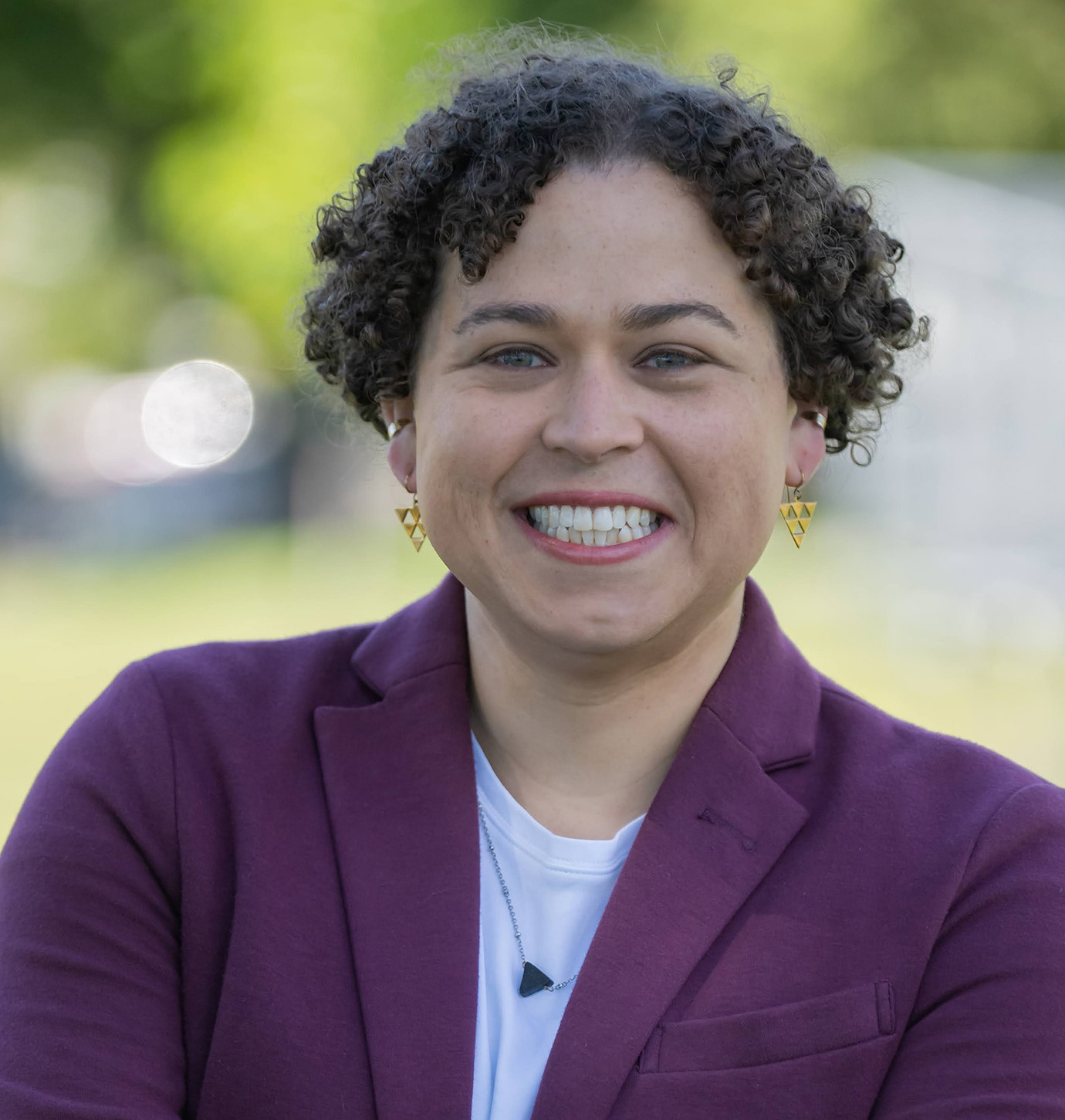
A Conversation with Kate Lipper-Garabedian, Candidate for State Senate
By Ellen Putnam

Photo From Kate Lipper-Garabedian
After six years as Melrose’s state representative, Kate Lipper-Garabedian is now running for the open state senate seat created by the retirement of current State Senator Jason Lewis.
“I believe that I have the right values, experience, and track record of success in local and state elected office to be able to deliver for our district and for the Commonwealth as a whole from the day I am sworn in,” Lipper-Garabedian said.
Lipper-Garabedian has held public office since 2018, first as a Melrose city councilor and then as state representative.
In her six years as state representative, she said, “I am proud of the work that we as an office, along with our local partners across the district, have accomplished in a relatively short amount of time: making sure the state is delivering for the cities and town in our district; bringing to Beacon Hill the expertise and civic engagement of our constituents; and leading on issues that matter to the Commonwealth and the nation as a whole.”
“What we’re accomplishing in the legislature gives me such pride,” Lipper-Garabedian went on, “working hand-in-hand with municipal leaders, neighbors, and friends across the district. The work we’ve done has made a difference in people’s lives. But right now we’re dealing with headwinds from the federal government, and we need to continue to make Massachusetts more affordable and inclusive. We have a lot of work to do, and we need someone who will serve with qualifications and a proven track record to be our next state senator - and I think that’s me.”
One of Lipper-Garabedian’s top priorities will be continuing to push back against the Trump administration. “In my time at the State House,” she said, “we have faced a chaotic and cruel federal administration, and I have been proud to stand with colleagues as both an ally and a champion of legislation to push back on this dystopian vision of the future.”
Specifically, she talked about her support of the PROTECT Act this spring, which places limits on federal immigration enforcement; her consistent support of measures intended to protect access to abortion and reproductive healthcare; her focus on investing in green infrastructure and protecting children from gun violence; and her commitment to supporting the rights of LGBTQ+ residents.
“We need to continue to reaffirm that Massachusetts has a very different vision of what it means to be American from that of the federal administration,” she went on. “That is what I want the future to look like for our children. We need to reject the violent rhetoric and demonization of folks who make up the fabric of our communities. Right now, that is front of mind for me: these threats are not hypothetical for people in our district. That is going to have to remain a top priority for me and for the legislature. At the same time, I want to continue working on issues that are important to keeping Massachusetts a place where people feel confident raising their kids and retiring.”
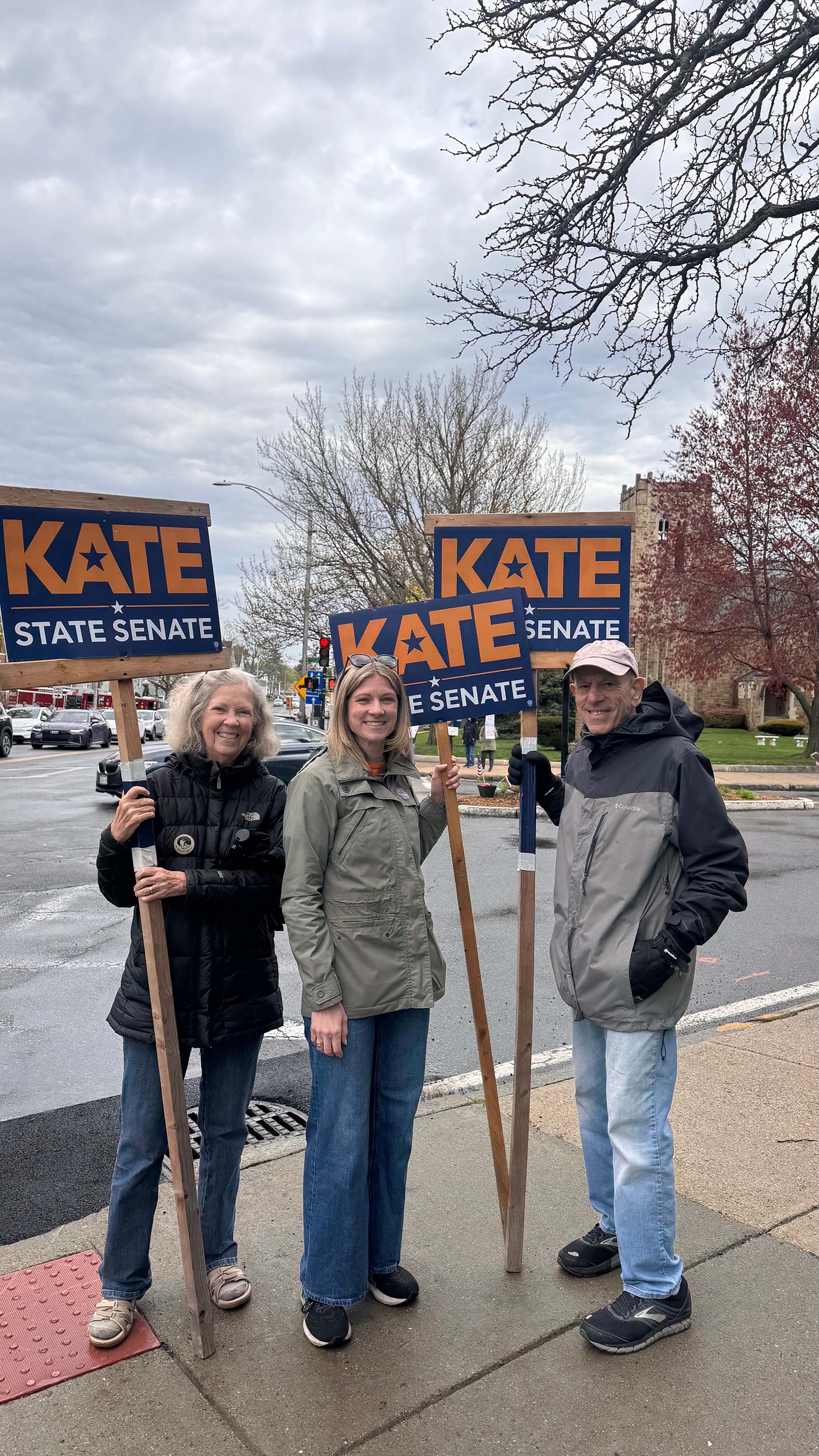
Lipper-Garabedian with her parents in Melrose
Photo From Kate Lipper-Garabedian
Education is one of Lipper-Garabedian’s top priorities. Early in her career, she was a seventh-grade English teacher. After graduating from Harvard Law School, she worked as an education attorney, and then as chief legal counsel to the state Secretary of Education.
“I want to make sure that Massachusetts doesn’t rest on our laurels as ‘the education state,’” she said. “There are still significant opportunity gaps for our kids, and we need to continue to make sure that our funding for public schools reflects rising costs, and make sure that kids are getting an appropriate education.”
Lipper-Garabedian pointed to her work cosponsoring the STUDY Act, which would ban cellphones in classrooms, and the College in High School Act, which would provide more secondary students with access to college credit-bearing coursework and workforce development while in high school. She also expressed her support for a recent financial literacy bill and one mandating evidence-based reading instruction in early elementary classrooms.
“We need to make sure the curriculum for reading instruction for kindergarten through third grade is actually vetted and approved and science-based,” she said. “Right now, low-income students in Mississippi have a better chance of reading proficiently than students in Massachusetts, and that’s not a fluke - that’s because Mississippi leaned into the science of reading years ago and their investment has paid off.”
Lipper-Garabedian is one of only ten mothers of school-aged children currently serving in the legislature which, she noted, “is a gross underrepresentation of the workforce more broadly.”
Drawing on her own personal experience, she was part of the legislature’s push to make pandemic-era funding for childcare permanent. “When I came into the legislature,” she said, “my children were one and six years old. I knew that early education and childcare are tremendously important. So when the pandemic relief money dried up, I spoke in front of the caucus and told them this should be a top priority. It’s not only critical for kids, but also for working parents, because without quality childcare options, they can’t return to the workforce. I was proud to use my personal experience and voice to help make that funding permanent.” She also expressed her support for universal free school meals, noting that many of the students she once taught were food insecure.
“And I will continue to lean into affordability issues,” Lipper-Garabedian went on. “Housing is a primary driver of costs. We passed the Affordable Homes Act, and there are many different policy and funding levers that we can pull at the state level to increase housing options for folks to lessen that financial burden.” She served as the Vice Chair of the Elder Affairs Committee, and also emphasized the importance of ensuring that older adults can remain in the communities they have given so much to.
She also supports improvements to mass transit, noting how central it is to the district. “I’ve been out at our district’s train stations during this campaign,” said Lipper-Garabedian, “and I am a transit user myself. We have a very transit-rich district, and we have worked to direct funding from the Fair Share Amendment to that network. I was grateful to have been able to push back on pandemic-era cuts,” she added, including the proposed closure of the Cedar Park commuter rail station, “and I’m proud of the improvements we’ve made to the Orange Line. But we still have more work to do.”
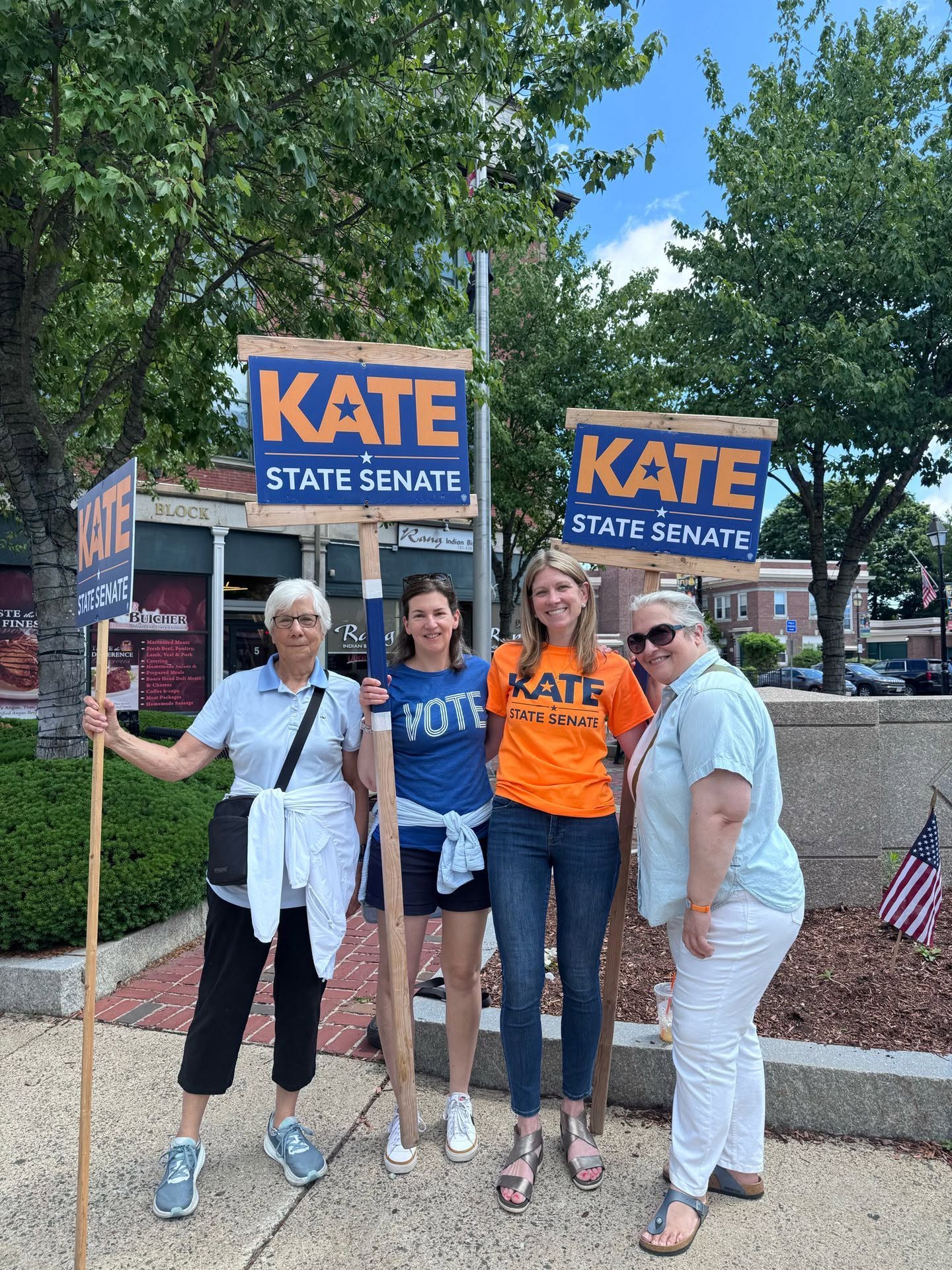
Lipper-Garabedian with supporters
Photo From Kate Lipper-Garabedian
Another important issue for Lipper-Garabedian is data privacy, which she addresses in her role as the House chair of the Emerging Technology Caucus. “A lot of our fundamental values and rights are protected in our state constitution,” she said, “but the founders didn’t anticipate life in a digital age. We recognize that technology is an incredibly important tool, and we lean into the fact that Massachusetts is an innovation economy. But we have a responsibility to make sure that we’re including guardrails, and to make sure that the things we care about here have permanency, even in a world that is quickly shifting. We need to modernize the statutory framework while being mindful of the fact that so much commerce and life happens online now.”
She referenced her sponsorship of the Student and Educator Data Privacy Act and the Location Shield Act, which would make Massachusetts one of the first states to prohibit the sale of location data that is collected by personal devices and apps. “We know that anti-abortion zealots in other states are using this data to target people,” she said, “and the Trump administration has partnered with data brokers to track immigrants it wants ICE to have disappear. But it’s important for anybody: gun enthusiasts who want to be able to exercise their Second Amendment rights; judges who want to go home at night and not be tracked.”
Lipper-Garabedian also noted that this bill provided an opportunity for bipartisan collaboration. One of her Republican colleagues expressed his support for the bill when a narrow version of it passed the House, calling privacy a human right. “When I refiled the bill this session,” she said, “I invited him to serve as a cosponsor and partner - and it shows just how important it is to build a coalition.”
Discussing state funding for municipalities, Lipper-Garabedian said: “The second largest policy area the legislature funded in this budget cycle - after healthcare, which is largely non-discretionary - was municipal aid. As a former city councilor, I recognize how important it is for the state-local partnership to be incredibly strong. We want people to see their tax dollars at work in local projects, and help reinforce their belief in democracy, that government can make a difference in people’s lives.”
She noted that, although state aid to local governments and school districts did increase this year, “we know there’s still more work to do.” Specifically, this year’s budget established a foundation budget review commission, which could potentially make changes to the state’s formula for setting education aid, and will be looking at both the costs of education and the revenue school districts receive from property taxes.
“All six cities and towns in the 5th Middlesex District have either recently put an override on their ballot or are talking about one,” Lipper-Garabedian noted. “There is not always the capacity at the local level to raise enough money through property taxes to accomplish the educational goals that are required by state law.”
It is also possible that changes to Proposition 2½ could come in the future. Lipper-Garabedian observed that some other states that have similar caps on local property taxes allow their caps to be tied to inflation. “I am very open to having that conversation here in Massachusetts,” she said, “including with the Massachusetts Municipal Association. And organized labor has a critical role to play in the conversation. I’m hearing more folks beginning to talk, and there is growing attention on the property tax framework, and whether we need to revisit it.”

Lipper-Garabedian and Mayor Jen Grigoraitis with former Melrose High School student Frantzdy Pierrot, who played for the Haitian national soccer team in the World Cup this year
Photo From Kate Lipper-Garabedian
On the ongoing discussion of transparency within the legislature, Lipper-Garabedian said: “From the time that I took elected office as a city councilor, I have ensured that I am providing my constituents with a significant level of information: what I’m working on, what positions I’m taking, and ways that they can be involved. I have continued that as a state representative through my email newsletters, social media posts, virtual and in-person office hours, podcasts - I look for any opportunity to make sure that I am learning from my constituents, and sharing what I am doing so they can hold me accountable for my work.”
“In the six years that I’ve served in the legislature, I’ve seen a good amount of progress on making sure that people are aware of what’s going on,” she went on, “Committee votes and attendance are now public, hearings are open to the public, and you don’t even have to physically come in to the State House to testify anymore. I will continue to press leadership to look for opportunities to allow people to get involved.”
“We’ve been hearing rhetoric from the other side of the aisle at the national level that calls into question the legitimacy of our democratically elected government,” Lipper-Garabedian continued, “and I believe that a democratically elected government is there to serve people and improve the lives of their families. When someone attacks that principle, it concerns me. I go to work in a chamber with 159 other people who are doing their best and working hard for their constituents. Every so often there is an exception, but they are generally good, well-meaning people.”
“The issue of transparency that the State Auditor has latched onto is very politically salient and strategic,” she said. “I would note that the House has been audited for years, and those audits are publicly available online. We are one of the only state legislatures that perform an outside, professional audit - most do an inside audit. We offered to allow the auditor to select a professional auditing firm, and she balked at that. She wants to keep this issue alive because it’s a really energizing issue.”
“We finally pressed her and asked for the specific types of documents she wanted, and the House decided to codify that in a bill that would provide what she was asking for and would not call into question the coequal, separate powers framework. She called foul on that as well, even though the level of access that we were offering was unprecedented. I am not aware of any executive branch agency in any other state that is permitted to audit the legislative branch.”
“I’m concerned that all the attention on this issue is taking attention away from what she should be auditing,” Lipper-Garabedian added.
“I am the only candidate in this race who has served in all three branches of government,” she said. Lipper-Garabedian clerked for a judge, worked as Chief Legal Counsel for a cabinet-level official, and now serves in the legislative branch. “Trump has managed, with his sycophants, to blow past what the framers of the Constitution envisioned as three coequal branches of government. The separation of powers is important.”
“I’m proud of the work we’ve done to improve transparency,” she continued, “and I know that the legislature can do more, but this is a political issue for the current auditor, and we need to consider what framework we will have in place after all of us are no longer in office. We have the longest surviving constitution in the world, and I take my oath to the Constitution very seriously.”
As to how she would approach her work in the state senate, Lipper-Garabedian said: “In any new job, from seventh-grade teacher in a challenged school system to state representative, I’ve entered the new work environment with a great deal of curiosity and an ethic of hard work in order to understand the institution I am joining. I appreciate that I need to learn from my colleagues in order to understand the processes in the state senate, the history behind different issues and relationships, in order to navigate that environment to get things done.”
In her work as state representative, Lipper Garabedian said, “I have demonstrated a collaborative approach. I recognize the complexity of the issues we deal with, because not every corner of the Commonwealth feels the same way. As iterative and grinding as the legislative process can be, there are real wins that we can have, and we can build momentum for bigger wins in the future. My colleagues have come to trust my thoughtfulness, and know that I will be unapologetically firm on certain issues while recognizing that I have to work with others to get things done.”
Lipper-Garabedian was endorsed by our current state senator, Jason Lewis, who encouraged her to run for the seat. “He’s seen how I’ve worked over the last six years, and he knows that the State Senate would be an environment where I would be very effective and that I would enjoy. It is very meaningful to me to have his endorsement in the race.”