All About November’s Override Questions!
By Ellen Putnam
As we head into election season, Melrose voters have lots of questions about the three Proposition 2½ override questions that will be on the ballot in November. If we haven’t answered your question here, let us know at editor@themelrosemessenger.org and we’ll try to get an answer for you!
And you can find our override explainer videos, where we address many of these questions, here!
What is a Proposition 2½ override?
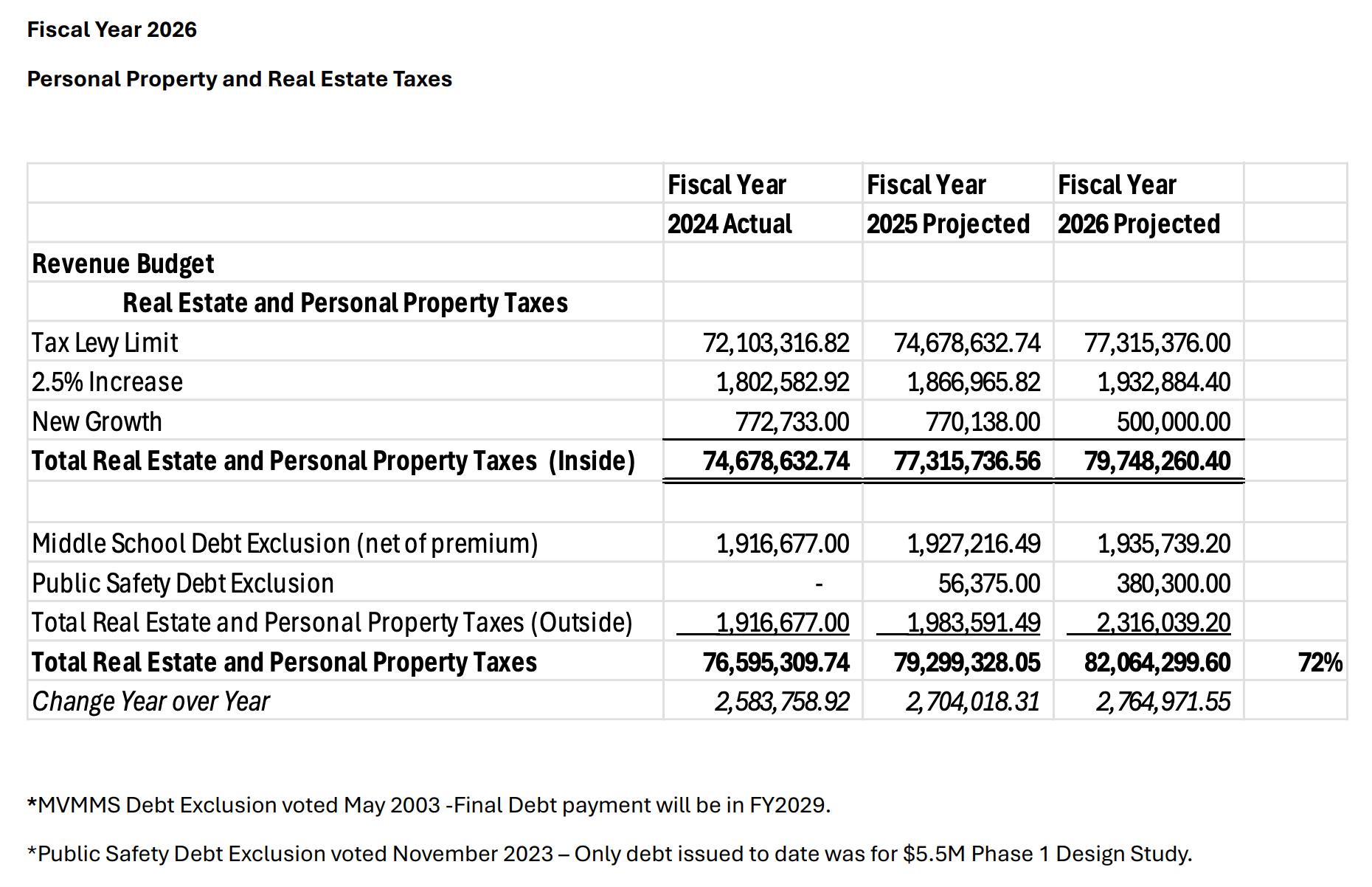
Chart A: Melrose’s property tax levy in FY24, FY25, and FY26
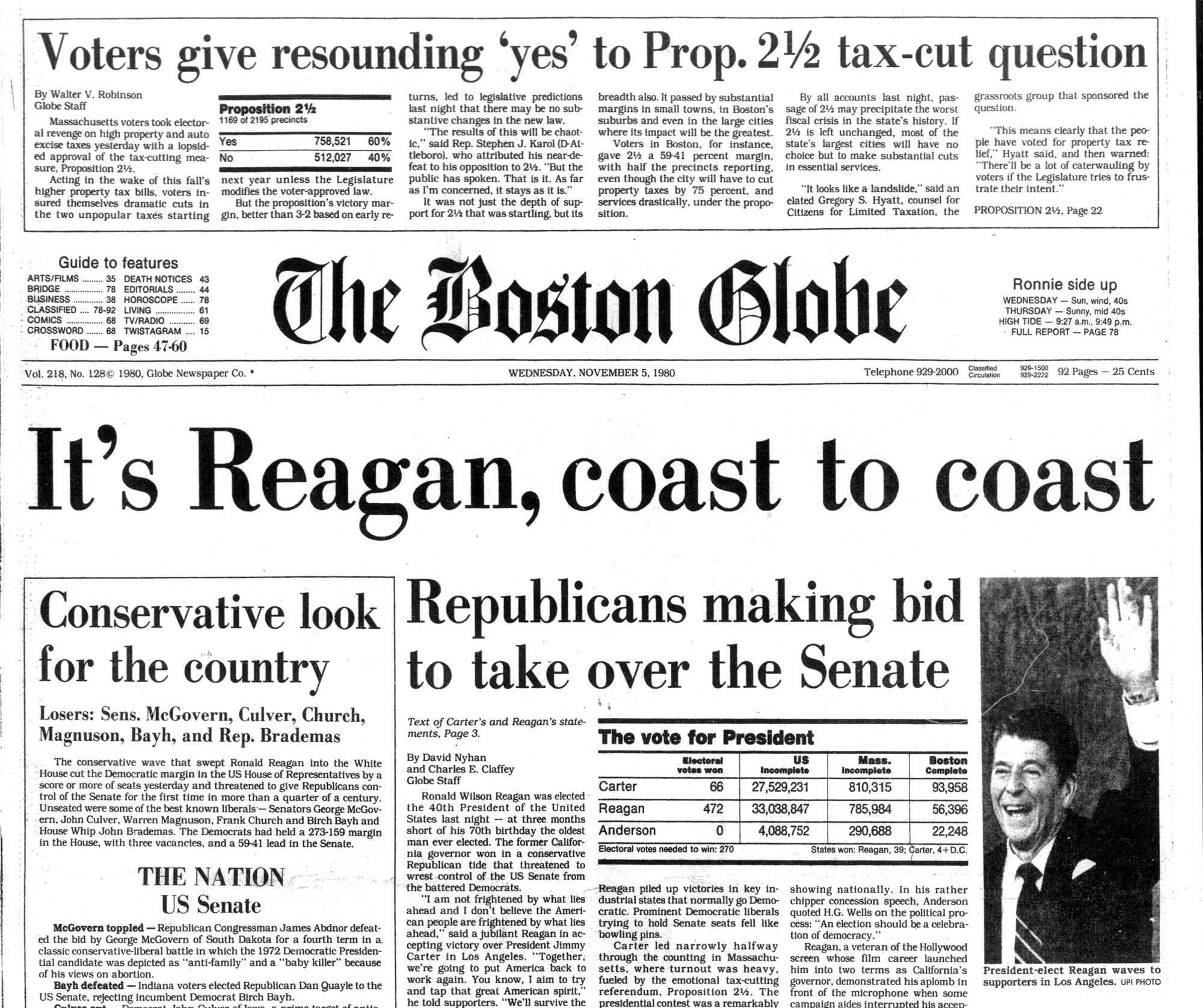
Proposition 2½ was a statewide ballot initiative that passed in 1980. It prohibits towns and cities in Massachusetts from raising the total amount they collect in property taxes by more than 2.5% each year, plus some amount calculated to reflect new growth in the town.
Read our brief history of Prop 2½ here, and learn more about how it works.
Chart A shows how the revenue Melrose collects from property taxes increases year over year, including the allowed 2.5% increase and the new growth calculation.
Under Proposition 2½, cities and towns can increase the amount they can collect in property taxes if the majority of voters in the city or town pass an override. The Massachusetts Division of Local Services defines an override as a permanent increase in the levy limit (the amount a city or town can collect in property taxes) for a specific amount that is approved by voters. The state law does not set any limits on how many override questions can be asked, the amount of the override, or how often override questions can be presented to voters.
Melrose has passed two overrides since 1980: in 1992 (for $3 million), and 2019 (for $5 million). Three other override attempts, including one last spring for $7.7 million, did not pass.
Why is the city asking for an override?
While the city’s property tax revenue cannot rise more than 2.5% each year without the passage of an override, inflation each year since 2021 has been over 2.5%, with a peak at 8% in 2022. Additionally, a number of costs within the budget have recently been rising faster than inflation, including health insurance premiums for employees (which rose 12% this year); tuition for students with disabilities, charter schools, and regional vocational schools; transportation; and employee salaries, which under union and individual contracts are generally seeing an increase of 3% or more per year.
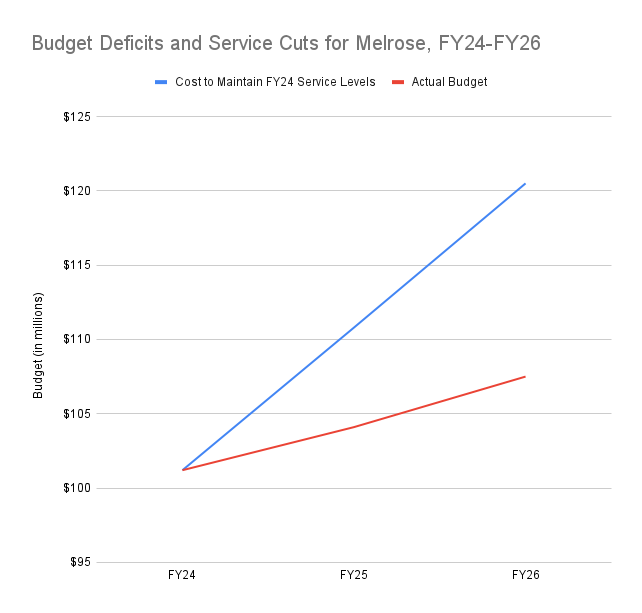
The blue line shows the cost to maintain service levels from FY24, including the Superintendent’s proposed needs-based budget, in FY25 and FY26, compared to the actual budget (red line) for those years
Due to this gap between revenue and costs, and the end of federal funding that kept cuts at bay in the years immediately following the COVID-19 pandemic, Melrose has made significant cuts to services over the past two fiscal years.
Specifically, between Fiscal Year 2024 (FY24) and FY25, the city and schools made a total of $6.7 million in cuts, and eliminated 46.1 FTEs of positions relative to the Superintendent’s proposed needs-based budget. And then, between FY25 and FY26, the city and schools made a total of $6.3 million in cuts and eliminated 61.4 FTEs relative to the previous year’s budget.
Note that the city and school budgets calculate positions in FTEs (full-time equivalency). 1.0 FTE is a person working full-time. The number of positions eliminated in the budget includes eliminating proposed and unfilled positions as well as laying off employees from filled positions.
On top of these cuts, the city is currently projecting a $4 million budget deficit for next year. To see what $4 million in cuts might look like, check out our FY26 budget tool here.
While the city did put an override question before voters last year that did not pass, it’s worth noting that, in the two budget cycles (FY25 and FY26) since then, residents have seen service cuts equal to nearly 10% of the budget, with more projected to come in FY27.
You can read our coverage of the FY26 budget process here, which discusses in detail the cuts that the city made heading into this year.
More About the Override Vote...
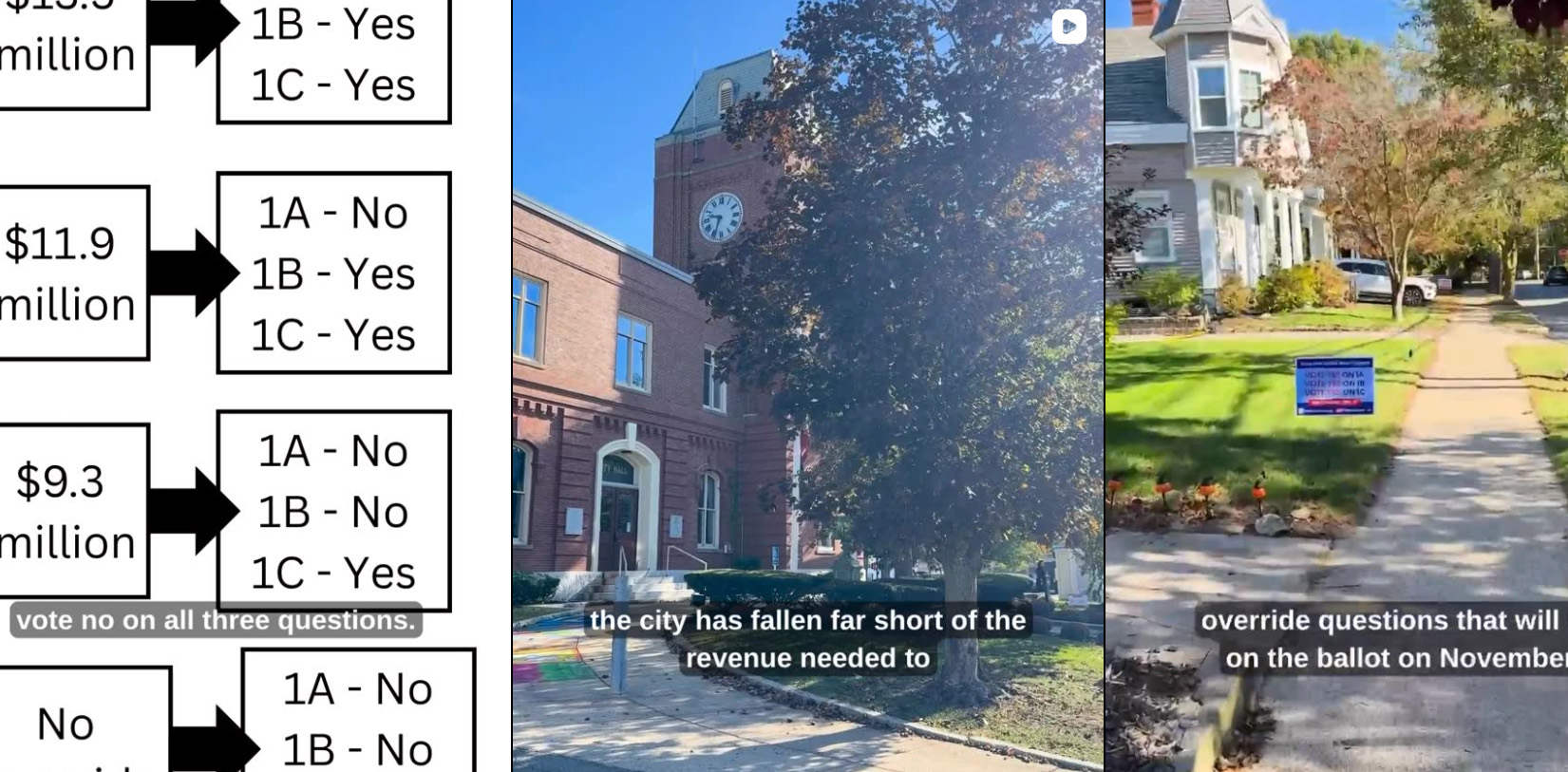


Why will there be three override questions on the ballot?
While cities and towns usually present override questions as either a single question or a “menu” of options, the state also allows cities and towns to present voters with a “tiered” override format. Mayor Grigoraitis explained that her task force chose this format because they wanted to provide voters with options, but they did not want to pit different city services against one another.
Melrose voters will see the following language and questions on their ballots in November:
Ballot Questions
Instructions to Voters: Questions 1A, 1B and 1C are separate questions. You may vote for or against each question independently. Each question requires a majority of those voting on that question to pass. If more than one question passes, the question with the highest dollar amount will prevail.
1A. Shall the City of Melrose be allowed to assess an additional $13,500,000 in real estate and personal property taxes for the purposes of funding: 17 school, 5 public works, and 2 police officer positions (salaries and benefits); city and school employee union contracts and benefits; school technology and curriculum needs; public works, senior center, veterans services, and library programs; and repairs and maintenance to roads, sidewalks, buildings, and parks for which the monies from this assessment will be used for the fiscal year beginning July 1, 2025?
- Yes
- No
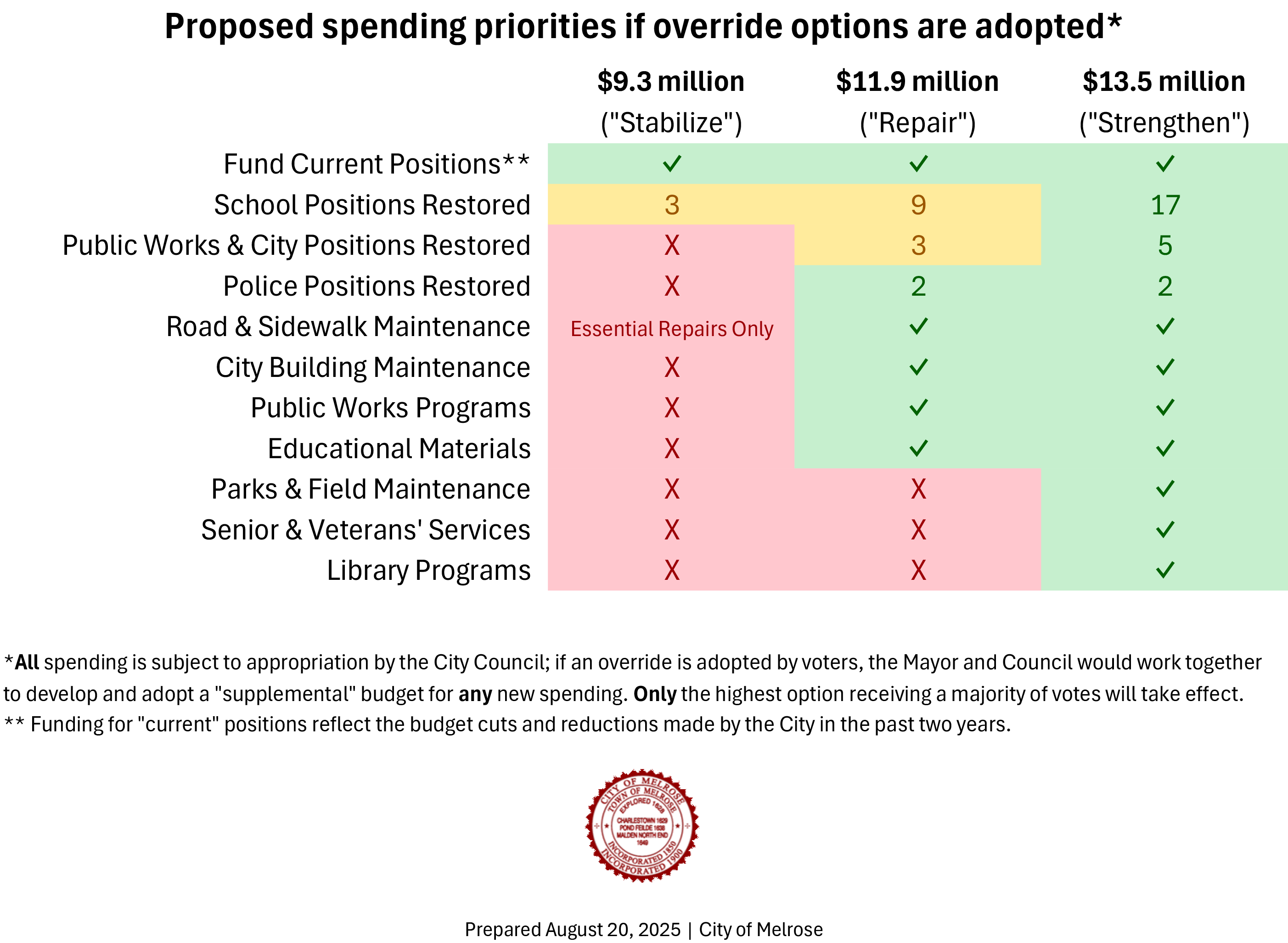
The budget implications of each of the three override amounts, according to the City of Melrose
1B. Shall the City of Melrose be allowed to assess an additional $11,900,000 in real estate and personal property taxes for the purposes of funding: 9 school, 3 public works, and 2 police officer positions (salaries and benefits); city and school employee union contracts and benefits; school technology and curriculum needs; public works programs; and repairs and maintenance to roads, sidewalks, and buildings for which the monies from this assessment will be used for the fiscal year beginning July 1, 2025?
- Yes
- No
1C. Shall the City of Melrose be allowed to assess an additional $9,300,000 in real estate and personal property taxes for the purposes of funding: 3 school positions (salaries and benefits); city and school employee union contracts and benefits; and essential repairs to roads and sidewalks, for which the monies from this assessment will be used for the fiscal year beginning July 1, 2025?
- Yes
- No
How do the “tiered” override questions work?
Unlike “menu” override questions (where voters choose from a menu of options, and more than one can go into effect), in the “tiered” override structure that Melrose is using, only one override amount, if any, can go into effect.
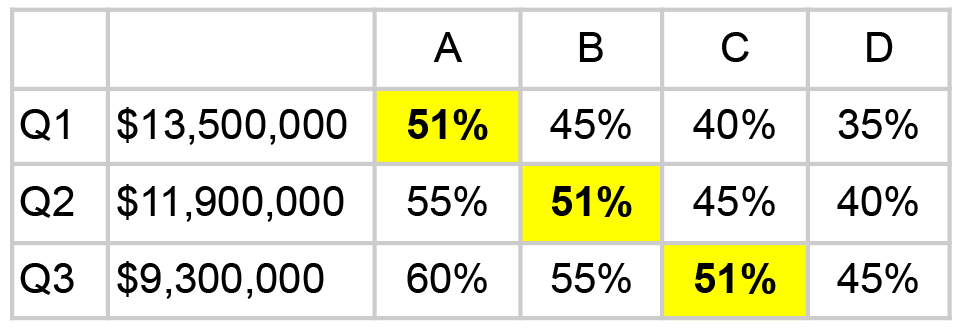
This image shows percentages of "Yes" votes for each override question in four example scenarios, A through D. The highlighted amount is the amount that goes into effect, if any.
The three override questions are connected, but independent of one another. Voters should make sure to vote on each of the three questions - if a voter leaves any question blank, their vote on that question will not be counted.
The override questions will be counted in the following manner:
- First, Question 1A (the $13.5 million override) will be counted.
- If there are more “Yes” than “No” votes on Question 1A, a $13.5 million override will go into effect.
- If there are more “No” votes than “Yes” votes on Question 1A, then Question 1B (the $11.9 million override) will be counted.
- If there are more “Yes” than “No” votes on Question 1B, an $11.9 million override will go into effect.
- If there are more “No” votes than “Yes” votes on Question 1B, then Question 1C (the $9.3 million override) will be counted.
- If there are more “Yes” than “No” votes on Question 1C, a $9.3 million override will go into effect.
- If there are more “No” votes than “Yes” votes on all three questions, then no override will go into effect.
How would the override questions affect my property taxes?
The effect on your property taxes will vary based on the assessed value of your home, but for a home with an assessed value of Melrose’s average, $821,716, residents would see the following effects:
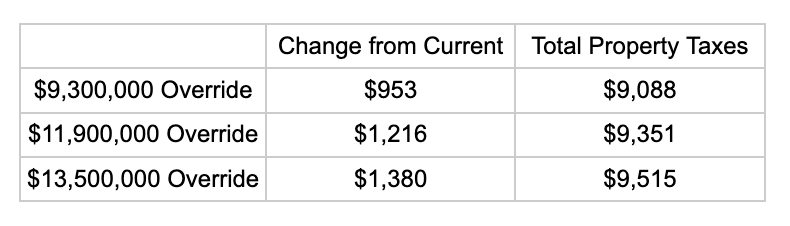
The City of Melrose provided more in-depth information about the costs here. To see how the override amounts would interact with the debt exclusions that voters have already approved, you can find our property tax estimator here.
There are some programs available for property tax relief through the city and the state, many of which are only available to low-income seniors. We discussed some of these programs here.
What arguments do the override campaigns make?
Because The Melrose Messenger has not been able to interview both override campaigns, we will not be running articles about the override campaigns (although we would very much like to if the opportunity becomes available!). We will continue to seek out opportunities to solicit perspectives from residents who support both sides, and we will continue to strive to to help residents listen to one another and understand one anothers’ perspectives.
The arguments for the “Yes” campaign can be found on the Yes! For Melrose website.
The arguments for the “No” campaign can be found on the Keeping Melrose Affordable website.
How should I vote on the override questions?
We can’t tell you what you should vote for, but we can help you make sure that your vote reflects what you want and you don’t get thrown off by the format of the questions.
We made a handy chart for voters, here:
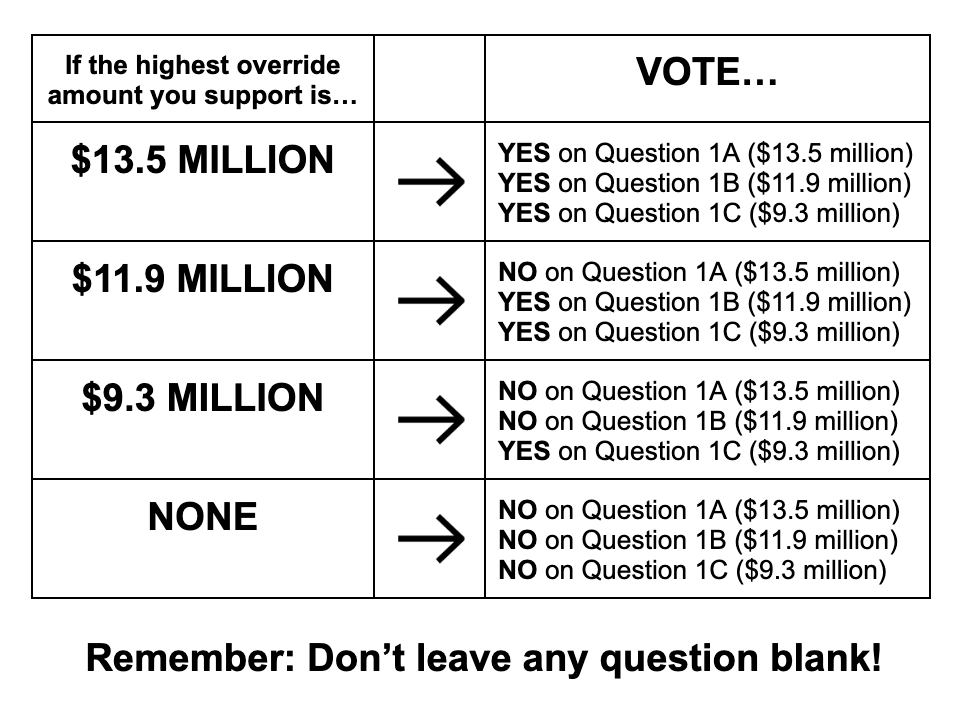
Do you have more questions? Let us know!